Major HHS Rule Change: Is Your Healthcare Practice at Risk of Losing Medicare Payments?

The latest HHS rule targets information blocking practices in healthcare, imposing penalties for non-compliance. Healthcare providers face increased scrutiny, financial impact, and reputational risk. To comply, they must strengthen compliance programs, conduct thorough staff training, assess health IT systems, and maintain detailed documentation. Legal challenges may arise following the Supreme Court’s decision.

Discover how the latest HHS rule on information blocking could impact your healthcare practice and Medicare payments. The new rule aims to address the barriers that prevent the secure exchange of electronic health information, ultimately enhancing patient access to their own health data.

By understanding the intricacies of this rule, healthcare professionals can proactively adapt their practices to ensure compliance, avoid potential penalties, and navigate any legal challenges that may arise.

Introduction

On June 24, 2024, the Department of Health and Human Services (HHS) released a groundbreaking final rule that could have significant implications for healthcare providers across the country. This new regulation, aimed at curbing information blocking practices as defined under the 21st Century Cures Act, establishes a stringent framework for penalizing providers found guilty of these practices. With the rule set to take effect soon, healthcare providers need to act quickly to ensure compliance and avoid potentially severe penalties.


What is Information Blocking?

Information blocking involves practices that interfere with the access, exchange, or use of electronic health information (EHI) and can hinder the seamless flow of information critical for patient care. This new rule targets such practices, ensuring that healthcare providers promote interoperability and share information as required.


Key Details of the New Rule

Implementation Date:

The rule will be effective 30 days after its publication in the Federal Register.

Authority and Purpose:

This rule exercises the Secretary’s authority under the 21st Century Cures Act (Cures Act) to establish disincentives for health care providers who engage in information blocking. Information blocking involves practices that providers knew were unreasonable and likely to interfere with access, exchange, or use of EHI.


Disincentives Outlined

Medicare Promoting Interoperability Program

Eligible Hospitals

A reduction in payment by three-quarters of the applicable percentage increase in the market basket update if the hospital fails to demonstrate meaningful EHR use.

Critical Access Hospitals (CAH)

Reduced payment to 100% of reasonable costs from 101% if they fail to meet meaningful EHR use requirements..

Merit-based Incentive Payment System (MIPS)

Eligible Clinicians and Group Practices

A zero score in the Promoting Interoperability performance category for those found guilty of information blocking.

Accountable Care Organization (ACO) – Medicare Shared Savings Program:

ACOs and Participants

Potential denial of participation for one year and other mitigating actions for those found guilty of information blocking.


Implications for Healthcare Providers

Increased Scrutiny:

Healthcare providers should prepare for heightened investigations and monitoring by the OIG regarding their information-sharing practices.

Financial Impact:

The penalties could result in substantial financial losses, particularly for providers who heavily rely on Medicare reimbursements.

Reputational Risk:

Public reporting of violations may damage the reputation of providers found guilty of information blocking.

Compliance Programs

Providers must strengthen their compliance programs to prevent information blocking practices.

Technology Assessment:

Providers should assess their health IT systems and practices to identify and address potential information blocking issues.

Documentation:

Maintaining thorough documentation of information-sharing practices will be crucial in defending against investigations.

Education and Training:

Comprehensive staff training is essential to ensure all team members understand the prohibitions and consequences of information blocking.


Practical Takeaways

This final rule marks a significant step in HHS’s efforts to enforce information blocking prohibitions and promote interoperability in the healthcare system. Healthcare providers, executives, and compliance professionals should:

  • Carefully review the rule’s provisions.
  • Take proactive steps to ensure compliance.
  • Stay informed about OIG’s investigative priorities and any further guidance from HHS.

Complementary Rules

HHS rule complements the OIG’s final rule from June 2023, which established penalties for other actors in the information blocking sphere, including health IT developers, health information exchanges, and health information networks. Violations by these entities can result in civil monetary penalties of up to $1 million per violation.


Potential Legal Challenges

In light of the Supreme Court’s decision in Loper Bright Enterprises v. Raimondo, which ended Chevron deference to federal agencies, there may be opportunities to challenge this final rule. Healthcare providers interested in exploring legal challenges should consult with legal counsel to discuss potential strategies and collective actions.


Information Blocking Investigations and Enforcement For Entities Subject to Civil Monetary Penalties

  1. OIG receives an information blocking complaint
  2. OIG uses its enforcement priorities to assess complaints
  3. OIG opens an information blocking case
  4. OIG investigates the complaint by gathering facts, conducting interviews, document requests, etc.
    1. OIG may consult with ONC to assess facts and information blocking regulations
    2. Case closed if OIG concludes information blocking was not committed
  5. OIG provides an opportunity to the entity to discuss OIG’s investigation
  6. If OIG concludes the entity committed information blocking, a demand letter is sent to the entity
  7. Entity has the opportunity to appeal OIG’s imposition of the penalty
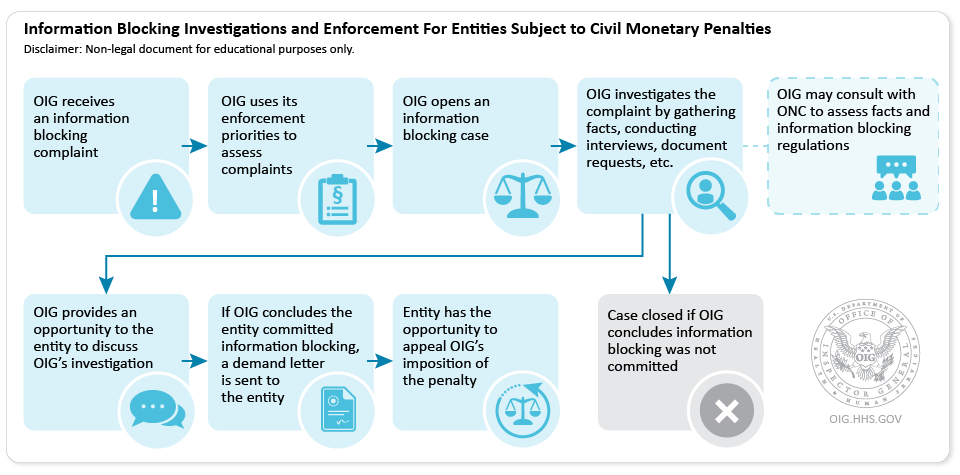
Enforcement Priorities

OIG expects that it will receive more information blocking complaints than it can investigate. To triage allegations and allocate resources, OIG will use the following priorities to select cases for investigation:

  • Resulted in, is causing, or had the potential to cause patient harm
  • Significantly impacted a provider’s ability to care for patients
  • Was of long duration
  • Caused financial loss to Federal health care programs, or other government or private entities
  • Was performed with actual knowledge

For more detail on these priorities and OIG’s approach to enforcing information blocking penalties, please see the rule


Conclusion

The new HHS rule is a pivotal measure in enhancing interoperability and ensuring seamless information sharing in the healthcare system. Providers must adapt quickly, bolster their compliance efforts, and remain vigilant to navigate this evolving regulatory landscape effectively. Failure to comply could result in significant financial and reputational damage, making immediate action essential for all healthcare providers.


FAQs

What is the effective date of the new HHS rule on information blocking?

The rule will take effect 30 days after its publication in the Federal Register.

What penalties are outlined for hospitals under the new rule?

Eligible hospitals may face a reduction in payment by three-quarters of the applicable percentage increase in the market basket update if they fail to demonstrate meaningful EHR use.

How will the rule impact Critical Access Hospitals (CAH)?

CAHs will see a reduced payment to 100% of reasonable costs from 101% if they fail to meet meaningful EHR use requirements.

What are the consequences for MIPS eligible clinicians found guilty of information blocking?

Clinicians or group practices will receive a zero score in the Promoting Interoperability performance category.

How will the rule affect Accountable Care Organizations (ACO)?

ACOs or their participants found guilty of information blocking may face denial of participation for one year and other mitigating actions.

What should healthcare providers do to comply with the new rule?

Providers should strengthen compliance programs, conduct comprehensive staff training, assess health IT systems, and maintain thorough documentation of information-sharing practices.


Understanding State-Level Variation in Medicaid Managed Care Maternity Kick Payments

Understanding State-Level Variation in Supplemental Maternity Kick Payments in Medicaid Managed Care


Introduction

Today, we’re exploring an intriguing study on the state-level variation in supplemental maternity kick payments in Medicaid managed care. This study, conducted by Samantha G. Auty, Jamie R. Daw, and Jacob Wallace, provides valuable insights into how these payments impact delivery costs and care quality.


Post Introduction

In this post, we’ll break down the key findings of the study, understand the implications of kick payments on Medicaid managed care, and discuss how these variations can affect maternal health outcomes across different states. Let’s get started by understanding the basics of Medicaid managed care and why kick payments are essential.


Detailed Story

What is Medicaid Managed Care?

Medicaid managed care (MMC) involves states contracting with private health insurers to provide Medicaid coverage. This model covers about 70% of pregnant Medicaid enrollees and finances approximately 41% of all births in the United States. Under MMC, insurers receive per-member-per-month capitated payments to cover a defined set of benefits. However, covering pregnant individuals poses a higher financial risk due to their increased healthcare needs, which often leads to states implementing one-time “kick payments” to MMC plans triggered by delivery events.

The Role and Variation of Kick Payments

Kick payments are designed to offset the higher costs associated with childbirth. The rates and use of these payments can significantly influence whether MMC plans are incentivized to attract or avoid pregnant enrollees. This study aimed to assess the prevalence and magnitude of these kick payments across different states and how they align with actual delivery costs.

Research Methodology

The researchers conducted a cross-sectional study, abstracting data from state documents and MMC contracts published between 2018 and 2020. They gathered information on whether states used kick payments, the services covered by these payments, and the specific rates.

Additionally, they compared these rates with average state Medicaid fee-for-service (FFS) payments for delivery hospitalizations in 2020 and the Medicaid-Medicare fee index.

Key Findings

The study revealed that out of the 38 states and the District of Columbia using comprehensive MMC, 33 states used maternity kick payments. These payments varied significantly, ranging from $2,838 in New Hampshire to $14,493 in Maryland. Interestingly, the variation in kick payment rates did not correlate with the Medicaid payments to physicians or the actual delivery costs, indicating that in some states, kick payments might exceed delivery costs, while in others, they fall short.

These payments varied significantly, ranging from $2,838 in New Hampshire to $14,493 in Maryland.


Expert Insights

To further explore the implications of these findings, let’s delve into some expert insights.

Potential Implications of Low Kick Payment Rates

When kick payment rates are set too low, MMC plans might attempt to limit services for pregnant enrollees or restrict access to maternity care providers. This can lead to disparities in care quality and access, particularly affecting Black and Indigenous women, who are disproportionately enrolled in Medicaid and face higher risks of maternal mortality and morbidity.

The Need for Aligned Incentives

Aligning kick payment rates with actual delivery costs and care quality is crucial. States need to design Medicaid payment policies that support maternal health and promote health equity. This requires continuous research to understand the effects of these payments on care access, quality, and outcomes.


In-Depth Analysis

The Study’s Limitations

While the study provides valuable insights, it has some limitations. It could not directly associate kick payment rates with MMC plan behavior or maternal health outcomes. Additionally, the comparison was made with Medicaid FFS payments rather than the prices MMC plans paid for delivery services, which were unavailable.

The Path Forward

Further research is essential to evaluate the impact of kick payments on maternal care access and outcomes. Policymakers need comprehensive data to design effective Medicaid payment strategies that ensure equitable and high-quality maternal care.


Practical Tips

For state policymakers and healthcare administrators:

  1. Regular Review of Kick Payment Rates: Ensure that kick payment rates are regularly reviewed and adjusted to reflect actual delivery costs and care quality needs.
  2. Focus on Health Equity: Design payment policies that address disparities in maternal health outcomes, particularly for vulnerable populations.
  3. Data-Driven Decision Making: Use comprehensive data to evaluate the impact of payment policies on maternal care access and outcomes.

FAQ Section

Q1: What are Medicaid managed care kick payments? A: Kick payments are one-time payments made to Medicaid managed care plans to offset the higher costs associated with childbirth.

Q2: Why do kick payment rates vary between states? A: The variation can be due to different state policies, healthcare costs, and the structure of Medicaid managed care contracts.

Q3: How can low kick payment rates affect maternity care? A: Low rates can lead to MMC plans limiting services for pregnant enrollees or restricting access to maternity care providers, affecting care quality and access.

Q4: What can states do to improve kick payment policies? A: States should regularly review and adjust kick payment rates, focus on health equity, and use data-driven approaches to design effective payment policies.


Source

State-Level Variation in Supplemental Maternity Kick Payments in Medicaid Managed Care

Child and Family Health Policy Insights: CCF Blog Analysis

The Center for Children and Families (CCF) at Georgetown University’s McCourt School of Public Policy offers extensive insights into health policy issues affecting children and families. The CCF blog, “Say Ahhh!,” covers topics such as Medicaid, CHIP, health equity, maternal and early childhood health, and more.

One recent article discusses the positive momentum in Medicaid coverage for doula services. This coverage aims to address maternal and infant health crises by providing support during pregnancy, labor, and postpartum periods, particularly for low-income families. The article notes that as of now, 43 states and D.C. have taken steps to include doula care in Medicaid coverage​ (Center For Children and Families)​.

Another post highlights the new rule allowing Deferred Action for Childhood Arrivals (DACA) grantees to access Marketplace coverage starting in November 2024. This change will enable DACA recipients to purchase qualified health plans with financial assistance, which is expected to cover an additional 100,000 uninsured individuals. However, the rule does not extend to Medicaid and CHIP, which remains a significant gap in coverage​ (Center For Children and Families)​.

The Center for Children and Families (CCF) at Georgetown University’s McCourt School of Public Policy is a rich resource for information on health policy issues impacting children and families, especially those with low and moderate incomes. Their blog, “Say Ahhh!,” features a range of topics, from Medicaid and CHIP to maternal and early childhood health.

Key Topics and Articles:

  1. Medicaid and Doula Services:
    • Doula services are gaining momentum as states incorporate these services into Medicaid to improve maternal and infant health outcomes. Doulas provide non-clinical support during the perinatal period, which can reduce adverse birth outcomes and improve perinatal mental health. States like Washington have increased reimbursement rates for doulas to $3,500 per birth, the highest in the country, highlighting the importance of sufficient reimbursement to encourage more doulas to become Medicaid providers​ (Center For Children and Families)​.
  2. Marketplace Coverage for DACA Grantees:
    • A recent rule allows DACA grantees to access Marketplace coverage starting in November 2024. This rule enables them to purchase qualified health plans with financial help, potentially covering an additional 100,000 uninsured individuals. However, this rule does not extend to Medicaid and CHIP, maintaining a gap in coverage for DACA recipients​ (Center For Children and Families)​.
  3. State Medicaid Enrollment and Coverage:
    • Articles discuss the impact of the unwinding of continuous Medicaid coverage, with significant declines in child Medicaid enrollment. This situation underscores the need for states to take action to prevent children from losing coverage​ (Center For Children and Families)​.
  4. Behavioral Health Integration:
    • CMS has introduced new state opportunities to address behavioral, physical, and health-related social needs through the “Innovation in Behavioral Health” model. This initiative aims to integrate care for individuals covered by Medicaid and Medicare, addressing comprehensive health needs​ (Center For Children and Families)​.
  5. Child and Family Health Policy:

Additional Key Topics and Articles:

  1. Medicaid and CHIP Eligibility and Enrollment:
    • The blog discusses the variability in state performance regarding Medicaid and CHIP eligibility and enrollment, particularly during the unwinding of continuous enrollment protections put in place during the pandemic. This includes detailed analyses of state policies and their impacts on children and families​ (Center For Children and Families)​​ (Center For Children and Families)​.
  2. Behavioral Health Initiatives:
    • The CMS has introduced new opportunities for states to advance behavioral health care integration. This initiative aims to test new approaches for addressing behavioral, physical, and health-related social needs of individuals covered by Medicaid and Medicare. These models seek to improve overall health outcomes by integrating various aspects of care​ (Center For Children and Families)​.
  3. Impact of Policy Changes on Health Coverage:
    • Articles often examine how changes in federal and state policies affect health coverage for children and families. For example, discussions on the implications of the federal poverty level adjustments and how these changes impact eligibility for various health programs​ (Center For Children and Families)​.
  4. Innovations in Maternal and Child Health:
    • The blog covers innovations and state-level initiatives to improve maternal and early childhood health. This includes state efforts to expand Medicaid coverage for doula services and the outcomes associated with these initiatives, such as reduced adverse birth outcomes and improved maternal mental health​ (Center For Children and Families)​.
  5. Health Equity and Access:
    • CCF emphasizes the importance of health equity, particularly in how policies and programs are designed to ensure all children and families have access to affordable and high-quality health care. This includes addressing disparities in health outcomes among different racial and socioeconomic groups​ (Center For Children and Families)​.
  6. State-Specific Health Policy Developments:
    • The blog provides updates on state-specific health policy developments, such as new legislation, budget allocations, and innovative programs aimed at improving health coverage and care for children and families. For instance, discussions on how states like Washington are increasing doula reimbursement rates to promote better maternal health​ (Center For Children and Families)​.

Subscribe for Updates:

To stay updated with the latest posts and insights from the Center for Children and Families, you can subscribe to their updates here​ (Center For Children and Families)​.

These topics highlight the comprehensive efforts and detailed research conducted by CCF to improve health policies and outcomes for children and families in the U.S. For more in-depth articles and the latest updates, visiting the CCF blog directly is recommended.

Enhancing Maternal and Infant Health: The Role of Medicaid in Doula Services

Expanding Medicaid Coverage for Doulas: A Crucial Step for Maternal and Infant Health

As the maternal and infant health crises continue to challenge the healthcare system, there is growing recognition of the vital role that doulas play in supporting positive birth outcomes. Doula care has been shown to reduce the risk of adverse birth outcomes, lower infant mortality rates, and improve perinatal mental health. However, access to doula services remains limited, especially for low-income families who cannot afford out-of-pocket costs.

Recognizing this gap, many states are now taking significant steps to include doula services in Medicaid coverage. This movement is a promising development in the ongoing effort to enhance maternal and infant health outcomes across the nation. Currently, 43 states and the District of Columbia have made strides toward Medicaid reimbursement for doula care, a dramatic increase from just 21 states in 2022.

Why Doula Services Matter

Research consistently demonstrates the benefits of doula care. Doulas provide continuous physical, emotional, and informational support to mothers before, during, and shortly after childbirth. This support has been linked to a reduction in the need for medical interventions, such as cesarean sections, and a decrease in maternal anxiety and postpartum depression. Moreover, doulas help facilitate better communication between mothers and healthcare providers, ensuring that birthing plans and preferences are respected.

State-Level Innovations and Challenges

States are pioneering various approaches to integrate doula services into Medicaid. For instance, Washington State recently increased its reimbursement rate for state-certified doulas to $3,500 per birth, making it the highest in the country. This move is expected to encourage more doulas to become Medicaid providers, thereby increasing access to these critical services for Medicaid beneficiaries.

Despite these advancements, several challenges remain. Administrative burdens and equitable reimbursement rates are significant barriers that need addressing to ensure the widespread adoption of doula care within Medicaid. Some states have made progress by setting higher reimbursement rates and creating infrastructure support through doula hubs and referral systems.

Impact on Health Equity

The inclusion of doula services in Medicaid is also a step towards addressing health disparities. Black, American Indian, and Alaska Native women face higher risks of maternal mortality and severe maternal morbidity. These groups are disproportionately covered by Medicaid, and expanding access to doula care can help bridge the health equity gap by providing culturally competent support tailored to their needs.

Looking Ahead

While doulas are a crucial component of the maternal health care continuum, they are not a panacea. Policymakers must adopt a multifaceted approach that includes comprehensive maternal health strategies to improve outcomes. This includes expanding access to prenatal and postpartum care, addressing social determinants of health, and ensuring that all birthing persons have the support they need for a healthy and positive birthing experience.

The momentum towards Medicaid coverage for doulas is a hopeful sign of progress in maternal and infant health care. By continuing to address the barriers and building on these initial successes, states can create a more inclusive and effective health care system that supports all families during one of the most critical times of their lives.

For more detailed insights and ongoing updates on health policy issues affecting children and families, visit the Center for Children and Families blog.

Medicaid Coverage for Incarcerated Youth: California’s Initiative

What is the Justice-Involved Initiative?

The Justice-Involved Initiative is a pioneering program under California’s Medicaid reforms, specifically designed to extend Medicaid coverage to incarcerated individuals. Historically, under the Medicaid Inmate Payment Exclusion Rule, federal Medicaid funds could not be used to cover healthcare costs for inmates of public institutions, which includes youth detained in correctional facilities. However, through the Justice-Involved Initiative, California has become the first state to receive federal approval to offer a targeted set of community-based Medicaid services to Medi-Cal-eligible, incarcerated youth and adults for up to 90 days prior to their release.

Eligibility Criteria for Pre-Release Services

For incarcerated youth to receive pre-release services under the Justice-Involved Initiative, they must meet the following criteria:

  1. Medi-Cal or CHIP Eligibility: The youth must be eligible for either Medi-Cal or the Children’s Health Insurance Program (CHIP).
  2. Custody: They must be in the custody of a youth correctional facility.

Unlike adults, there are no specific health care criteria for youth to qualify for these services. However, adults must meet one or more of the following health care needs:

  • Mental illness
  • Substance use disorder
  • Chronic condition or significant non-chronic clinical condition
  • Intellectual or developmental disability
  • Traumatic brain injury
  • HIV/AIDS
  • Pregnant or postpartum

An important distinction in this program is that “youth” is determined by the correctional facility and not strictly by the individual’s age.

Available Pre-Release Services

The services available to incarcerated youth in the 90 days prior to their release include:

  • Reentry Care Management Services: Coordination of care to ensure a smooth transition back into the community.
  • Physical and Behavioral Health Clinical Consultation Services: Medical and mental health consultations to address immediate and ongoing health needs.
  • Laboratory and Radiology Services: Diagnostic tests and imaging.
  • Medications and Medication Administration: Access to necessary medications and management of medication regimens.
  • Medication Assisted Therapy (MAT): Includes counseling and support for substance use disorders.
  • Services by Community Health Workers (CHWs): Support from individuals with lived experience who can provide guidance and assistance.

Initiation of Pre-Release Services

The timing and initiation of these services depend on the length of stay and the anticipated release date of the incarcerated individual:

  • Short or Unknown Length of Stay: Services should begin as close to intake as possible, once the individual’s Justice-Involved aid code is activated.
  • Known Release Date (longer than 30 days stay): Services should commence within the 90-day period prior to their release.

Impact and Significance

The Justice-Involved Initiative represents a significant shift in how healthcare is provided to incarcerated populations, particularly youth. By extending Medicaid coverage to include pre-release services, California aims to improve health outcomes and facilitate a smoother transition back into the community. This initiative addresses the critical healthcare needs of incarcerated individuals, ensuring they receive necessary care before reentering society, which can help reduce recidivism and support overall public health.

Conclusion

California’s Justice-Involved Initiative is a groundbreaking effort to provide essential healthcare services to incarcerated youth and adults prior to their release. By ensuring these individuals receive the necessary medical, mental health, and support services, the initiative not only addresses immediate health needs but also supports their reintegration into the community. This innovative approach sets a precedent for other states to follow, aiming to enhance the well-being of justice-involved populations and promote more equitable healthcare access.

For more information, you can refer to detailed guidelines and policy documents provided by the Department of Health Care Services (DHCS).

  1. Congressional Research Service: Medicaid and Incarcerated Individuals
  2. CalAIM Behavioral Health Initiative Frequently Asked Questions
  3. Department of Health Care Services, Medi-Cal Managed Care Plans by County (2023 and 2024)
  4. Department of Health Care Services, Changes to Managed Care for the Child Welfare Population (April 2023)
  5. Department of Health Care Services, All Plan Letter No. 22-005: No Wrong Door Policy
  6. Department of Health Care Services, All Plan Letter No. 21-011 (Revised): Grievance and Appeals Processes
  7. Medi-Cal Manual for Intensive Care Coordination (ICC), Intensive Home Based Services (IHBS), and Therapeutic Foster Care (TFC) Services for Medi-Cal Beneficiaries
  8. Department of Health Care Services, Behavioral Health Information Notice No. 23-056: MOU Requirements for MHP and MCP
  9. Sample MOU Template

These resources provide detailed information about the Justice-Involved Initiative and related healthcare policies for justice-involved youth.

Addressing Critical Health Needs: Partnership HealthPlan of California Strategic Response to the 2024 Population Needs Assessment

Business Brief: Addressing Critical Needs in Population Health

Partnership’s membership remained relatively stable in 2023. The member redetermination process, resulting from the winding down of the COVID-19 Public Health emergency, caused some small fluctuations. At the close of 2023, Partnership served approximately 660,800 members throughout 14 counties.

In 2024, Partnership will no longer contract with Kaiser Permanente, will fully operationalize its 10-county expansion, and the Medi-Cal redetermination process will continue.

Partnership’s membership is expected to continue to fluctuate as a result. The 2024 Population Needs Assessment draws from a broad range of data sources to identify member needs along with the overall community conditions where members live.

Executive Summary

The 2024 Population Needs Assessment (PNA) conducted by the Partnership HealthPlan of California highlights significant gaps in healthcare access, economic stability, neighborhood conditions, and social support across its 14-county service area. This brief outlines the critical needs identified and the strategic responses planned to address these issues, ensuring improved health outcomes and equity for all members.

Identified Needs and Strategic Responses

1. Healthcare Access and Quality

Identified Needs:

  • Provider Shortages: Insufficient access to primary care, dental, specialty care, mental/behavioral health, and substance use care providers.
  • Transportation Challenges: Particularly in rural areas, long distances and lack of transportation options hinder access to care.

Strategic Responses:

  • Provider Recruitment and Retention Initiatives:
    • Launching a Provider Recruitment Program to attract healthcare professionals to underserved areas with new incentives, including sign-on bonuses.
    • Implementing a Provider Retention Initiative (PRI) Pilot to incentivize primary care clinicians for long-term service, preserving institutional knowledge and clinical leadership.
    • Telehealth Expansion: Increasing the use of telemedicine to enhance access to behavioral health services, particularly in remote regions.
2. Economic Stability

Identified Needs:

  • High Poverty and Unemployment Rates: Prevalent in rural and frontier regions.
  • Severe Housing Problems: Overcrowding, high housing costs, and inadequate facilities affect many households.

Strategic Responses:

  • Leveraging State Funds:
    • Utilizing initiatives like CalAIM, Community Supports, and the Homeless and Housing Incentive Program (HHIP) to address housing instability.
    • Offering scholarships to local Community Health Worker (CHW) programs to create employment opportunities and enhance the healthcare workforce.
3. Neighborhood and Built Environment

Identified Needs:

  • Limited Access to Healthy Foods: Particularly in rural areas, contributing to poor nutrition and related health issues.
  • High Rates of Physical Inactivity: Linked to chronic health conditions in several counties.

Strategic Responses:

  • Food and Nutrition Programs:
    • Partnering with local agencies to improve access to healthy foods and provide nutrition education.
    • Conducting outreach to promote healthy eating habits and reduce food insecurity.
  • Physical Activity Promotion: Implementing community-based programs to encourage physical activity and healthy lifestyles.
4. Social and Community Support

Identified Needs:

  • High Rates of Adverse Childhood Experiences (ACEs): Leading to long-term negative health outcomes.
  • Substance Use and Smoking: High prevalence of tobacco use and substance abuse, including among adolescents.

Strategic Responses:

  • ACE Prevention and Support Programs: Developing initiatives in collaboration with schools and community organizations to address ACEs and provide support.
  • Substance Use Prevention Campaigns:
    • Conducting educational interventions to reduce tobacco use and prevent substance abuse among adolescents and adults.
    • Promoting smoke-free environments through community outreach and education.

Conclusion

The Partnership HealthPlan of California is committed to addressing the critical needs identified in the 2024 PNA through comprehensive and targeted initiatives. By enhancing healthcare access, addressing social determinants of health, improving neighborhood conditions, and strengthening community support, the organization aims to foster equitable health outcomes and ensure a higher quality of life for all its members.

Population Needs Assessment

Partnership conducts an annual Population Needs Assessment (PNA), which reviews and analyzes the overall environment, specific community needs, and factors influencing the health and well-being of Partnership’s member population.

To read the 2024 report, click on the following: Population Needs Assessment

Population Needs Assessment

Partnership conducts an annual Population Needs Assessment (PNA), which reviews and analyzes the overall environment, specific community needs, and factors influencing the health and well-being of Partnership’s member population.

To read the 2024 report, click on the following: Population Needs Assessment

Archived Population Needs Assessments

​Community Health Assessments and Community Health Improvement Plan

Partnership participates in the Community Health Assessments (CHA) (sometimes called a CHNA) and Community Health Improvement Plan (CHIP) processes conducted by the local health jurisdiction in each of our 24 counties. This collaboration enhances Partnership’s ability to identify needs and assets within our members’ communities, and strengthens our relationships with community partners.

Below you will find CHAs and CHIPs for each Partnership county in addition to how Partnership participated with the county.

Butte County

Partnership staff participated in a review of the key findings and top 6 health needs identified in the CHA. Butte County released their CHA in December 2023. Click here to view the report.

Modoc County

Partnership staff participated in a review of county concerns, and discussed a tentative goal with the county. Modoc County released their CHNA in January 2024. Click here to view the report.

Napa County

Partnership staff participated in a review of county concerns, and discussed a tentative goal with the county. Napa County released their CHA in December 2023. Click here to view the report.

Shasta County

Partnership staff participated in a review of the key findings and priority areas identified in the CHIP process. Partnership and Shasta County co-developed a SMART goal focusing on increasing child well visits, aligned with DCHS’s Bold Goals 50×2025 initiative. Shasta County released their CHIP in June 2024. Click here to view the report.

Sonoma County

Partnership staff participated in a review of the county’s approach to their assessment and improvement plan, discussed the county’s 4 priority areas, and gathered ideas for a tentative shared goal with the county. Sonoma County released their combined CHA/CHIP report in December 2023. Click here to view the report.

Yuba County

Partnership staff participated in a review of CHIP health priority areas, and a discussion around how Partnership can help the county going forward. Yuba County released their CHIP in December 2023. Click here to view the report.

Classroom Attendance Calculator: A Tool for Monitoring Student Absences

Monitoring chronic absence data is essential for ensuring educators are equipped to support their students effectively. Amidst the busy school year, it can be easy to lose track of how absences accumulate for individual students. This is where the Classroom Attendance Calculator developed by Attendance Works comes into play. It helps educators determine whether a student’s absences place them in the satisfactory, at-risk, or chronic absence categories.

Importance of Monitoring Chronic Absences

Chronic absenteeism can significantly impact a student’s academic performance and overall well-being. Early identification of students who are frequently absent allows for timely interventions that can help mitigate the negative effects of missed school days. By regularly monitoring absence data, educators can ensure that every student receives the support they need to succeed.

Features of the Classroom Attendance Calculator

Self-Calculating Spreadsheet

The Classroom Attendance Calculator is a self-calculating spreadsheet designed to identify students who require early intervention due to excessive absences. If your district does not provide chronic absence reports, this tool can serve as an invaluable resource for tracking student attendance.

Categories of Absence

The calculator categorizes students’ absences into three groups:

  1. Satisfactory: Students whose absences are within an acceptable range.
  2. At-Risk: Students who are beginning to show a pattern of frequent absences.
  3. Chronic: Students whose absences are significantly impacting their academic progress and require immediate attention.

Comprehensive Tracking

The tool prompts educators to consider both excused and unexcused absences, as well as suspensions, ensuring a comprehensive view of each student’s attendance record. This holistic approach helps in identifying patterns and understanding the reasons behind frequent absences.

Step-by-Step Guide

The calculator comes with a step-by-step guide to help educators fill in the spreadsheet accurately. This guide ensures that the data entered is consistent and reliable, providing a clear picture of each student’s attendance status.

Action Plan Worksheet

In addition to the attendance calculator, a worksheet is included for educators to assess their current strategies and identify additional measures to reduce chronic absenteeism. This reflective tool encourages educators to think critically about their approaches and develop effective action plans.

Utilizing the Attendance Calculator

To use the Classroom Attendance Calculator effectively:

  1. Input Data: Enter each student’s absences, including excused, unexcused, and suspension days.
  2. Review Categories: Observe which category each student falls into based on their absence record.
  3. Develop Interventions: Use the action plan worksheet to devise strategies for supporting students with chronic absences.

By actively monitoring and addressing chronic absenteeism, educators can create a more supportive and conducive learning environment for all students. The Classroom Attendance Calculator from Attendance Works is a powerful tool that empowers educators to stay informed and take proactive steps in ensuring student success.

RESOURCE BROUGHT TO US BY:

Attendance Works seeks to advance student success and reduce equity gaps by reducing chronic absence. Their work includes influencing better federal, state and local policy and practices around school attendance, encouraging school districts to track chronic absence data from an early age, and partnering with families and community agencies to intervene as soon as poor attendance becomes evident for a child or school.

Strategies for Success: Navigating California’s CalAIM Program

by Ali Modaressi, California Health Report

Photo by nathaphat/iStock

California’s ambitious journey to reshape health care through the multiyear Medi-Cal reform effort known as California Advancing and Innovating Medi-Cal (CalAIM) represents a profound leap forward. The effort will introduce a variety of new programs and benefits over five years, aimed at improving care for the millions of Californians enrolled in Medi-Cal, the state’s safety-net health insurance program.

Two years into the program, there is anecdotal evidence that providers are already starting to see improvements in the patients they serve. However, providers are experiencing many challenges in adapting to the new whole-person and coordinated care approach, including resource capacity and redundant processes. The problem is compounded by the fast pace at which the state and health plans drive the program. Achieving successful implementation requires creative thinking and coordination of available resources. 

As someone with more than 30 years of experience in health care information technology, and a member of a stakeholder advisory group for the California Health and Human Services Data Exchange Framework, here are the strategies I believe can make CalAIM a success.  

  • Seamless, purposeful data integration

CalAIM’s vision of more coordinated care across clinical, mental and social services, relies heavily on data integration and interoperability. This involves seamlessly sharing patient data among health care providers, payers and social service organizations. Achieving this level of data integration has been a formidable challenge. Health care organizations operate disparate data systems, each with their own workflow, formats, standards and protocols.

The Data Exchange Framework (DxF), which most of the state’s health care organizations are required to fully implement by January 2024, will support successful care coordination and sharing of patient information among stakeholders involved in CalAIM. 

State-funded grants are available to help facilitate this transformation. The Center for Data Insights and Innovation has allocated up to $47 million for organizations that have signed an agreement to adopt the DxF and share data. In addition, the CalAIM Incentive Payment Program from the Department of Healthcare Services provides  the funds dedicated specifically to helping CalAIM participants deploy the technology to meet key targets in their implementation and delivery of transformative programs and services. 

  • Build capacity to address skill gaps

Funds are also available for technical assistance. The state has appointed PATH TA Marketplace Vendors to allow providers, community-based organizations, counties and others to obtain assistance with implementing Enhanced Care Management (ECM) and Community Supports, two foundational initiatives of the CalAIM program. The program helps eligible organizations build data capacity, redesign workflow, strengthen services that address the social drivers of health, engage in CalAIM through Medi-Cal Managed Care plans, promote health equity, and enter cross-sector partnerships. 

  • Prepare the workforce for a data-driven future

Health care reform inevitably brings change. This requires comprehensive change management strategies that include communications, stakeholder engagement, and education and training for health care and social service professionals. The workforce will need to learn new technology and paradigms associated with CalAIM’s implementation. Future health and social service workers will require training on electronic health records, health information organization exchanges, and other health IT systems and how to use them effectively. 

  • Consider innovative solutions for care delivery challenges

The CalAIM transformation requires addressing workforce shortages, particularly in rural and underserved areas. Establishing comprehensive training programs and incentives for health care professionals in underserved regions can help address these shortages. Automating administrative tasks will reduce redundant processes and make resources available for patient care. Telehealth initiatives can also bridge gaps in access to care. In addition to IT training, cultural sensitivity training is critical to ensure the delivery of quality and compassionate care for our most vulnerable populations. 

  • Get involved to advocate, share and recognize efficiencies 

At the recent State of Reform Southern California Policy event, community-based organization representatives shared that new processes and more resources are needed to effectively deliver Enhanced Care Management for children and young people. Sharing key challenges and potential solutions creates new opportunities for dialogue and cross-training and can influence future resource allocation and policy. This reduces excessive burdens on community-based organizations and the risk of duplicating services. 

Considering that 50 percent of the state’s births are in Medi-Cal, it is critical to ensure the successful implementation of the CalAIM program for healthy and thriving communities across California. As with any transformational process, there are many factors involved in achieving successful implementation of CalAIM. These include ensuring frontline organizations responsible for delivering and coordinating care have enough resources, knowledge and preparation to move us closer to the vision of equitable health care for all Californians.

Ali Modaressi is CEO of the Los Angeles Network for Enhanced Services, a qualified health information organization in Los Angeles, and serves on the California Health and Human Services Data Exchange Framework Stakeholder Advisory Group. 

This article first appeared on California Health Report and is republished here under a Creative Commons license.

Introducing the Care MAP Tool: A Comprehensive Guide

Introducing the Care MAP Tool, designed to support healthcare providers in managing complex care needs. This user-friendly, Excel-based tool offers a structured framework for effective care coordination, resource allocation, and patient management. With modules for an overview and practical scenarios, plus a comprehensive resource library and FAQ section, the Care MAP Tool enhances care strategies and improves patient outcomes. Download it today and elevate your care management practices.

Effective care management is crucial in today’s complex healthcare landscape. To support healthcare professionals and organizations, we are excited to introduce the Care MAP Tool, a valuable resource designed to aid in complex care management. This blog will provide an overview of the Care MAP Tool, walk you through an example scenario, and offer access to a resource library and frequently asked questions (FAQ) section.

Module 1: Care MAP Overview

The Care MAP (Management and Planning) Tool is designed to support healthcare providers in managing and planning care for patients with complex health needs. This tool provides a structured framework to help clinics navigate the intricacies of care coordination, resource allocation, and patient management. Here’s what you can expect from the Care MAP Tool:

  • Framework for Complex Care Management: The tool offers a comprehensive structure to address the multifaceted needs of patients requiring intensive care management.
  • User-Friendly Interface: The Excel-based tool is intuitive and easy to navigate, ensuring that healthcare providers can quickly integrate it into their workflows.
  • Scalable and Adaptable: Whether you’re a small clinic or a large healthcare organization, the Care MAP Tool can be scaled and adapted to fit your unique needs.

Module 2: Example Scenario

To illustrate the practical application of the Care MAP Tool, let’s walk through an example scenario:

Scenario: Managing a Patient with Multiple Chronic Conditions

  1. Patient Overview:
    • Name: Jane Doe
    • Age: 65
    • Conditions: Diabetes, Hypertension, Chronic Obstructive Pulmonary Disease (COPD)
  2. Initial Assessment:
    • Medical History Review: Gather comprehensive information about Jane’s medical history, including past treatments, hospitalizations, and medications.
    • Social Determinants of Health: Assess factors such as living conditions, access to transportation, and social support.
  3. Care Coordination:
    • Interdisciplinary Team: Form a care team that includes primary care physicians, specialists, nurses, social workers, and community health workers.
    • Care Plan Development: Create a personalized care plan that addresses Jane’s medical and social needs, with clear goals and timelines.
  4. Monitoring and Evaluation:
    • Regular Check-ins: Schedule regular appointments and follow-ups to monitor Jane’s progress.
    • Adjustments: Modify the care plan as needed based on Jane’s response to treatment and changes in her condition.

Resource Library

The Resource Library is a curated collection of materials to further support your use of the Care MAP Tool. Here, you’ll find:

  • Guides and Manuals: Detailed instructions on how to use the Care MAP Tool effectively.
  • Case Studies: Real-world examples of the tool in action, showcasing its impact on patient outcomes.
  • Training Videos: Step-by-step video tutorials to help you and your team get up to speed quickly.

FAQ

To ensure you have all the information you need, we’ve compiled a list of frequently asked questions:

Q1: Who can use the Care MAP Tool?
A1: The tool is designed for healthcare providers, including clinicians, care coordinators, and administrative staff.

Q2: Is there a cost associated with the Care MAP Tool?
A2: No, the Care MAP Tool is available for free download.

Q3: How do I get support if I encounter issues with the tool?
A3: Support is available through our online helpdesk. You can also refer to the Resource Library for troubleshooting guides.

Care MAP Tool Download

By using the Care MAP Tool, you acknowledge that you have read and agree to the disclaimer below. If you share the tool, ensure that all individuals given access to it have reviewed and agreed to the disclaimer language before using it for any purpose.

Disclaimer: The Care MAP Tool is intended as a general framework to support considerations around complex care management in a clinic setting. It is not meant for final staffing, clinical, administrative, operational, and/or financial decision-making. Information obtained from this tool is not and should not be taken as legal or financial advice and is not a substitute for consulting a qualified professional. Community Initiatives does not accept responsibility for any loss that may arise from reliance on this tool.

Source Link:

Download Materials:


Feel free to reach out with any questions or feedback about the Care MAP Tool. Happy planning!

Dashboards: Breastfeeding Intention and Duration Indicators

The Breastfeeding Intention and Duration Indicators are key measures used to track breastfeeding practices and intentions among new mothers. These indicators include plans to breastfeed exclusively or in combination with formula, actual breastfeeding activities, and breastfeeding duration up to three months. They exclude mothers whose infants were not living with them at the survey time, ensuring data accuracy. These indicators help shape effective breastfeeding support programs, inform policy decisions.

Introduction

Breastfeeding is a critical component of infant health, providing essential nutrients and antibodies that help protect against infections and diseases. To monitor and improve breastfeeding practices, it’s essential to have accurate indicators that reflect breastfeeding intentions and behaviors. This blog post delves into key breastfeeding indicators, defining terms and outlining the criteria for inclusion and exclusion in related data surveys.

Breastfeeding Intention and Duration Indicators

1. Intended to Breastfeed

This indicator captures the mother’s or parent’s plan before delivery regarding breastfeeding. Specifically, it includes those who planned to either exclusively breastfeed or combine breastfeeding with formula feeding. It’s important to note that mothers or parents whose infants did not reside with them at the time of the survey are excluded from the denominator. This exclusion ensures that the data reflects the intentions of those who were in a position to breastfeed their child.

2. Intended to Breastfeed Exclusively

This indicator focuses on the mother’s or parent’s plan to exclusively breastfeed before delivery, without the use of formula or other supplements. Similar to the previous indicator, mothers or parents whose infants did not reside with them at the time of the survey are excluded from the denominator. This approach helps in accurately assessing the intention to exclusively breastfeed among those who had the opportunity to do so.

3. Ever Breastfed

The “ever breastfed” indicator refers to any instance of breastfeeding or feeding of breast milk by the mother or parent since the birth of the child. This broad indicator captures any initial breastfeeding activity and excludes mothers or parents whose infants did not reside with them at the time of the survey. By doing so, it ensures that the data accurately represents those who had the chance to initiate breastfeeding.

4. Any Breastfeeding at 3 Months

This indicator measures the extent to which infants are fed breast milk for at least three months after delivery. It includes both exclusive breastfeeding and breastfeeding combined with formula, other liquids, or food. The infant’s age is calculated from the date of birth on the birth certificate. Mothers or parents whose infants did not reside with them or whose infants were not yet three months old at the time the survey was completed are excluded from the denominator. This exclusion helps maintain the relevance and accuracy of the data by focusing on those who reached the three-month milestone.

Importance of Accurate Indicators

Accurate breastfeeding indicators are crucial for several reasons:

  1. Policy and Program Development: Reliable data helps policymakers and healthcare providers develop targeted programs to support breastfeeding mothers and improve breastfeeding rates.
  2. Resource Allocation: Understanding breastfeeding intentions and behaviors allows for better allocation of resources, ensuring that support systems are in place where they are most needed.
  3. Public Health Insights: These indicators provide valuable insights into public health trends, enabling better planning and intervention strategies to promote infant health and well-being.

Conclusion

Breastfeeding indicators play a vital role in understanding and improving breastfeeding practices. By clearly defining terms and carefully excluding certain groups from the denominator, these indicators provide accurate and meaningful data. This data, in turn, supports efforts to promote breastfeeding, contributing to better health outcomes for both mothers and infants. As we continue to monitor and analyze breastfeeding trends, we can work towards creating a more supportive environment for breastfeeding families.

Breastfeeding Intention and Duration Indicators

Intended to Breastfeed: This indicator measures the mother’s or parent’s plan before delivery to either exclusively breastfeed or to combine breastfeeding with formula. Excluded from this measure are mothers/parents whose infants did not reside with them at the time of the survey.


Intended to Breastfeed Exclusively: This captures the mother’s or parent’s pre-delivery plan to solely breastfeed without any formula or supplements. Mothers/parents whose infants were not living with them at the time of the survey are excluded.


Ever Breastfed: This indicator reflects any instance of breastfeeding or feeding of breast milk by the mother/parent since the birth of the infant. It excludes mothers/parents whose infants did not reside with them at the time of the survey.


Any Breastfeeding at 3 Months: This measure looks at whether the mother/parent fed their infant breast milk for at least three months after delivery, with or without supplementing with formula, other liquids, or food. Infants not yet three months old or not residing with their mother/parent at the time of the survey are excluded.


Importance of These Indicators
These breastfeeding indicators are crucial for developing support programs, informing policy decisions, and enhancing public health initiatives. They provide accurate insights into breastfeeding behaviors and intentions, helping to promote better health outcomes for both mothers and infants.