Biofourmis Launches Its Chronic Condition Management Platform

The Biofourmis Care platform currently supports five virtual care programs: heart failure, hypertension, diabetes, lipid management, and atrial fibrillation. The technology platform facilitates care coordination across care settings and provider organizations and supports user communications with the care team. Biovitals, the Biofourmis artificial intelligence-powered predictive analytics engine, analyzes the data from the consumer wearables.

Remote Monitoring Company Biofourmis Launches Its Chronic Condition Management Platform

Biofourmis has launched its Biofourmis Care technology-enabled care management service for health care systems and health plans that delivers remote care for individuals with chronic conditions. The program provides a virtual care team, health navigators, decision support for clinical professionals, and automated medication management. Consumers receive a wearable sensor that captures and communicates multiple physiologic signals into the Biofourmis Care software.

The Biofourmis Care platform currently supports five virtual care programs: heart failure, hypertension, diabetes, lipid management, and atrial fibrillation. The technology platform facilitates care coordination across care settings and provider organizations and supports user communications with the care team. Biovitals, the Biofourmis artificial intelligence-powered predictive analytics engine, analyzes the data from the consumer wearables. The platform has three elements:

  • Care@Home which offers virtual care programs across a wide range of clinical conditions.
  • Hospital@Home for acute conditions, remote management for post-discharge care, and virtual specialty care for long-term chronic disease management. The platform can co-manage multiple chronic diseases at once, tailor the intensity and cadence of services delivered to match the severity of the illness, and integrate personalized information to individualize automated medication initiation and titration algorithms.
  • A user app that allows individuals to communicate with their dedicated clinical care team via text, talk or video call.

The platform is supplemented by a care team composed of health navigators, who are frontline care coordinators, and a multidisciplinary team of licensed clinical professionals, including physicians, nurses, and advanced practice clinical professionals. The virtual care teams partner with the consumer’s pre-existing, on-the-ground primary and specialty care professionals.

There are multiple points of entry into the Biofourmis Care service; it supports the transition from hospitalization to home or directly from an ambulatory setting in the course of a visit with a primary care or specialty care clinical professional.

After the consumer returns home, the health navigator reviews and responds to notifications from the platform, and serves as the consumer’s first resource for clinical concerns or technical troubleshooting. The health navigator also triages and escalates concerns to the appropriate primary care professional, who then provides higher level clinical expertise as needed. The electronic health record (EHR) is updated accordingly.

Biofourmis, based in Boston, is a health technology company. The company develops and delivers virtual care and clinically validated digital prescription therapeutics.

No Surprises Act

On January 1st, 2022, the No Surprises Act went into effect and it provides federal protections for patients from surprise medical bills.

On January 1st, 2022, the No Surprises Act went into effect and it provides federal protections for patients from surprise medical bills!  

For those that don’t remember, surprise medical bills can happen when someone receives a bill for care they thought should be covered by their insurance.

Very frequently this happens when patients seek emergency care for things like a heart attack or stroke, only to find out later that the emergency care provided was out-out-of-network. You have no way to know this ahead of time and the last thing you should be worried about in an emergency situation is the cost of your care.

In non-emergency situations you may have done your due diligence and sought care at an in-network hospital, only to receive a surprise bill months (can be more than a year) later because the doctor or other providers associated with your care may not work for the hospital and do not take your insurance.

Beginning this month, consumers with group or individual health plans are protected from receiving surprise medical bills for most emergency services, non-emergency services from out-of-network providers at in-network facilities, and services from out-of-network air ambulance providers.

Specifically, this law will:

  • Ban surprise bills for most emergency services even if you get them out-of-network and without prior authorization.
  • Ban out-of-network cost-sharing for most emergency and some non-emergency services.
  • Ban out-of-network charges for certain services like anesthesiology or radiology furnished by out-of-network providers as part of a patients’ visit to an in-network facility.
  • Require that health care providers and facilities give you an easy-to-understand notice explaining your new protections and who to contact if you have concerns.
  • Require health care providers to seek patient consent to waive surprise medical billing protections.

For a more detailed information about the new law, we encourage you to refer to CMS resources about the No Surprises Act.

Prescription digital therapeutics (PDTs)

Prescription digital therapeutics (PDTs) are software applications that are prescribed by a licensed healthcare provider.

Prescription digital therapeutics (PDTs) are software applications that are prescribed by a licensed healthcare provider. They are used on a mobile device such as a mobile phone, tablet, smartwatch, or laptop computer. The goal of prescription digital therapeutics is to evaluate, diagnose, manage symptoms, or treat an illness, injury, or disease. Other types of software applications are used for general wellness and do not require a prescription by a health care provider.

Digital therapeutics (DTx)

Digital therapeutics (DTx): Deliver therapeutic, evidenced-based interventions driven by software to treat, manage, and prevent a broad spectrum of behavioral, mental, and physical diseases and disorders.

Digital therapeutics (DTx):

Deliver therapeutic, evidenced-based interventions driven by software to treat, manage, and prevent a broad spectrum of behavioral, mental, and physical diseases and disorders.

Talking about Mental Health at Work

Tools and Partnerships to help your organization raise awareness, reduce stigma surrounding mental illness, and facilitate help-seeking behavior.

If you or a co-worker are in immediate crisis, reach out to a crisis hotline at 800-273-8255 or text 741741. Trained professionals are available to provide confidential support.

MENTAL HEALTH @ WORK

Treatment can help people feel better and perform better. By sharing information and solutions, we can help reduce the stress on employees and company resources.

Tools and Partnerships to help your organization raise awareness, reduce stigma surrounding mental illness, and facilitate help-seeking behavior.

Talking about Mental Health at Work

Putting tasks off, missing deadlines or feeling indecisive. If you notice these signs in a co-worker and it just doesn’t seem right, be courageous and act.

Depression can be lonely and scary but starting a conversation can help a person feel supported. Here are some ways to start the conversation …

How to start the conversation. 

Talking about feelings and emotions may be uncomfortable for some people.  So start by finding a private place to talk and asking, “are you okay?” or “what’s going on, you don’t seem like yourself?” Describe what you’re seeing and how it seems out of character for that person.

Ask twice. 

A person may deflect the conversation if the topic feels uncomfortable. Talking about an issue that makes a person feel vulnerable is often not easy. For many, hearing someone ask “how are you doing,” it makes them think the person asking really does not want to hear anything negative.  We often say that we’re fine when we may not be feeling that way at all.

To get past this natural response, consider asking twice:

“How are you?”

“Fine.”

“Hey…  is everything okay?”

Try extra hard to show sincerity and compassion (through changes in vocal tone and body language) when you ask the second time.  This can really demonstrate your genuine concern for the other person’s wellbeing.

Listen. 

Take a minute to pause and just listen. When people share their feelings, they are vulnerable. Try to listen non-judgmentally and resist jumping in with a proposed solution. The person will benefit just from talking and having a good listener. If the person is defensive, it may be their feelings and emotions responding, so be patient. Try responding with “I just wanted to make sure that you’re okay and to let you know that I’m here if you ever want to talk.”

Ask for more context, don’t answer. 

Instead of a quick response or offering solutions, ask follow-up questions. You might ask why the person thinks that he or she feels this way or what is needed to feel better.  Ask if the way the person is feeling is impacting his or her daily life. You may also ask whether the person has considered talking with someone who can help. It is easier for someone to seek help if they find the answer themselves, rather than being told how to fix it.

Provide support. 

It is common to sometimes feel stressed, lonely, overwhelmed, frustrated, sad, and depressed. Let your co-worker know that it is okay to feel that way and it is a natural part of the human experience. It’s when it interferes with daily life that it’s time to consider getting help. Express your willingness to help with supportive statements like:

“I want to support you. Let’s talk about how I can help.”

“What can I do to help?” or “How can I help?”

Follow up. 

Be sure to check back in whether the person accepted your offer of support or not. This sends the clear message that you care and are there for support. Also, keep conversations and information shared with you confidential unless you’re worried a person may pose a danger to him or herself or others. In those cases, talk to HR, a manager or someone you trust immediately. Self-harm or potential harm to others require immediate attention.

Remember, a person may not be ready to talk or seek help. Remind him or her that you’re here to help when it is needed.

https://www.shatterproof.org/

If you or a co-worker are in immediate crisis, reach out to a crisis hotline at 800-273-8255 or text 741741. Trained professionals are available to provide confidential support.

Right Direction is an initiative from the American Psychiatric Association Foundation’s Center for Workplace Mental Health and Employers Health, a professional benefits organization. Right Direction is supported by Takeda Pharmaceuticals U.S.A., Inc. (TPUSA) and Lundbeck U.S. The information on this website is not intended to replace medical advice from your doctor. ©2013 – 2021 Right Direction.

Managed Care Contracts and Health System Operational Alignment

CASE EXAMPLE of how we breakdown contracts and tie the terms to operational alignment

Because the business of healthcare is to deliver the highest quality care to patients, improving clinical performance is the driving focus. However, understanding and responding to financial pressures through increased efficiency and enhanced revenue capture is what makes high-quality clinical delivery possible and sustainable.

Reimbursement StructureActivity triggering a more robust financial return
Reimbursed primarily on a fee-for-service basis, generate more revenue by using your care team as a provider–extender, enabling more patients to see the provider for a billable visit each day
The organization accepts full risk for patient costs, Ensuring patients are taught how best to manage their illness and avoid specialist or emergency room visits. 
Capitated fee for primary care services, experimenting with alternative visit types may maximize your ability to care for more patients
Nonphysician payment for CCMPractices that rely on nonphysician team members to deliver CCM services will probably experience substantial net revenue gains but must enroll a sufficient number of eligible patients to recoup costs.
“If nonphysician staff were to deliver CCM services, net revenue to practices would increase despite opportunity and staffing costs. Practices could expect approximately $332 per enrolled patient per year (95% CI, $234 to $429) if CCM services were delivered by registered nurses (RNs), approximately $372 (CI, $276 to $468) if services were delivered by licensed practical nurses, and approximately $385 (CI, $286 to $485) if services were delivered by medical assistants. For a typical practice, this equates to more than $75 ,00 of net annual revenue per FTE physician and 12 hours of nursing service time per week if 50% of eligible patients enroll. At a minimum, 131 Medicare patients (CI, 115 to 140 patients) must enroll for practices to recoup the salary and overhead costs of hiring a full-time RN to provide CCM services.”
Non-visit-based payment for chronic care management (CCM)Measuring Net revenue per full-time equivalent (FTE) physician; time spent delivering CCM services.

Nurse Practitioners Sentenced to Prison for Health Care Fraud

GREAT  FALLS – Two Montana nurse practitioners have been sentenced for conspiring to defraud Medicare of millions of dollars.  Chief U.S. District Judge Brian Morris sentenced Janae Nichole Harper, 34, of Kalispell, to 12 months in prison and Mark Allen Hill, 54, of Edinburg, North Dakota to 9 months in prison. 

GREAT  FALLS – Two Montana nurse practitioners have been sentenced for conspiring to defraud Medicare of millions of dollars.  Chief U.S. District Judge Brian Morris sentenced Janae Nichole Harper, 34, of Kalispell, to 12 months in prison and Mark Allen Hill, 54, of Edinburg, North Dakota to 9 months in prison. 

Both defendants will be placed on supervised release for 3 years after their release from prison.  Additionally, Harper was ordered to pay $4,307,934.58 in restitution and Hill was ordered to pay $5,054,866 in restitution.

Harper was a licensed nurse practitioner  in Montana, Missouri, Nevada, South Carolina and Wyoming and was enrolled as a medical provider with Medicare.  Hill was a licensed nurse practitioner in Montana, Iowa, Maine, Minnesota, North Dakota, South Dakota and Washington.

In court documents filed in Harper’s case, the government alleged that from Nov. 18, 2017 through July 16, 2019, Harper worked with certain staffing and telemedicine companies to commit health care fraud and received money to sign brace orders that were prepared by telemarketers who had no medical training or certification. Harper routinely signed these orders for Medicare beneficiaries regardless of medical necessity. Harper signed approximately 7,673 brace orders, which resulted in $8,259,849 billed to Medicare, of which Medicare paid approximately $4,307,934. Harper was paid at least $94,395 for the orders she signed.

Staffing and telemedicine companies to commit health care fraud and received money to sign brace orders that were prepared by telemarketers who had no medical training or certification.

U.S. Department of Health and Human Services

In court documents filed in Hill’s case, the government alleged that from Oct. 15,  2017 to April 24, 2019, Hill worked with certain staffing and telemedicine companies to commit health care fraud and received money to sign unnecessary brace orders for Medicare beneficiaries regardless of medical necessity, often without ever talking to the Medicare beneficiary to determine whether the braces were medically necessary.  Hill signed approximately 7,097 brace orders, which resulted in $10,055,436 billed to Medicare, of which Medicare paid approximately $5,054,866. Hill was paid at least $124,900 for the orders he signed.

Both defendants previously pled guilty to conspiracy to commit health care fraud. 

The cases were prosecuted by Assistant U.S. Attorney Michael A. Kakuk and Darren Halverson, Trial Attorney, and Robyn Pullio, former Trial Attorney, Fraud Section, Criminal Division of the Justice Department and investigated by the U.S. Department of Health and Human Services Office of Inspector General and the Federal Bureau of Investigation.

Telehealth Landscape Overview 50 States + DC

No two states are alike in how telehealth is defined and regulated. While there are some similarities in language, perhaps indicating states may have utilized existing verbiage from other states, noticeable differences exist. These differences are to be expected, given that each state defines its Medicaid policy parameters, but it also creates a confusing environment for telehealth participants to navigate, particularly when a health system or practitioner provides health care services in multiple states. In most cases, states have moved away from duplicating Medicare’s restrictive telehealth policy, with some reimbursing a wide range of practitioners and services, with little to no restrictions.

One of the most common trends with live video reimbursement was the addition of eligible services to the list of telehealth eligible services, with applied behavioral analysis being the most common service addition mentioned in Medicaid manuals.

Additionally, in the wake of the COVID-19 pandemic, some states do seem to be adopting the Center for Medicare and Medicaid Services (CMS) communication technology-based services (CTBS) codes, including the virtual check-in and remote evaluation of prerecorded information, audio-only service codes and remote physiologic monitoring. All fifty states and the District of Columbia have a definition in law, regulation, or their Medicaid program for telehealth, telemedicine, or both.

Additionally, because of the allowance in most states to utilize telephone as a form of telehealth during COVID-19, some states are taking steps to broaden its permanent definitions of telehealth or telemedicine by removing the explicit exclusion of telephone or including audio-only services within the definition itself. One of the states with the most significant changes to their telehealth policy was Massachusetts which passed a comprehensive telehealth law to require reimbursement for both Medicaid and private payers if the services are covered in-person and it is appropriately delivered through telehealth. The law contained some unique elements including specifying that the rate of payment for telehealth services provided via interactive audio-video technology and audio-only telephone may be greater than the rate of payment for the same services delivered by other telehealth modalities. It also provided payment parity for in-network providers of behavioral health services delivered via interactive audio-video technology or audio-only telephone only.

Additional findings include:

  • 50 states and Washington DC provide reimbursement for some form of live video in Medicaid fee-for-service.
  • 22 state Medicaid programs reimburse for store-and-forward. However, three states (NC, OH, VT) solely reimburse store-and-forward asa part of CTBS, which is limited to specific codes and reimbursement amounts. Additionally, three  jurisdictions (MS, NH, and NJ) have laws requiring Medicaid reimburse for store-and-forward but as of this time, have yet to have anyofficial Medicaid policy indicating this is occurring. 
  • 26 state Medicaid programs provide reimbursement for RPM. As is the case for store and-forward, two Medicaid programs (HI and NJ) have laws requiring Medicaid reimburse for RPM but at the time this response was written, did not have any official Medicaid policy. Additionally, one state (Ohio) only reimburses the remote physiologic monitoring codes CMS does.
  • 14 state Medicaid programs (Alaska, Arizona, Colorado, Maryland, Maine, Minnesota, Missouri, North Carolina, New York, Ohio, Oregon,Texas, Vermont and Virginia) reimburse for all three, although certain limitations apply.
  • 43 states and the District of Columbia have laws that govern private payer reimbursement of telehealth. Some laws require reimbursement be equal to in-person coverage, however most only require parity in covered services, not reimbursement amount. Not all laws mandate reimbursement coverage parity, and very few have explicit payment parity

Paying for Biopsychosocial Care

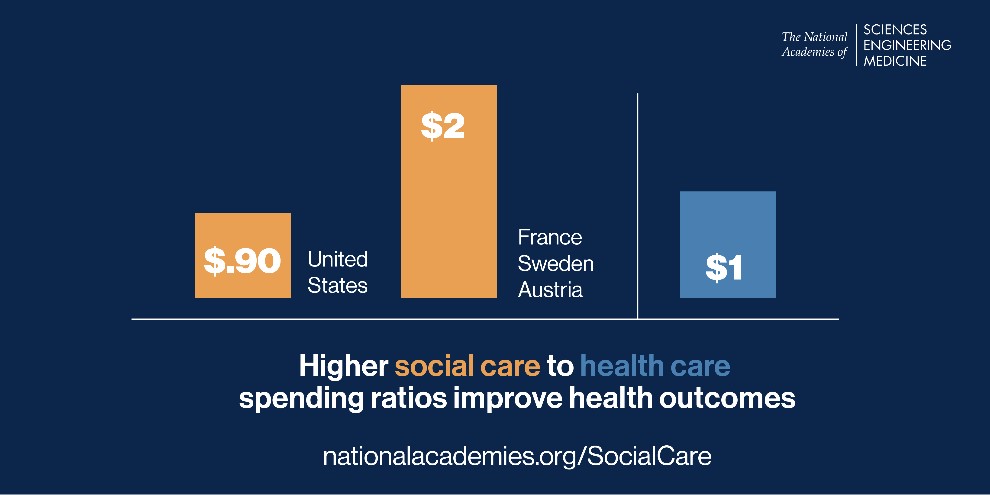
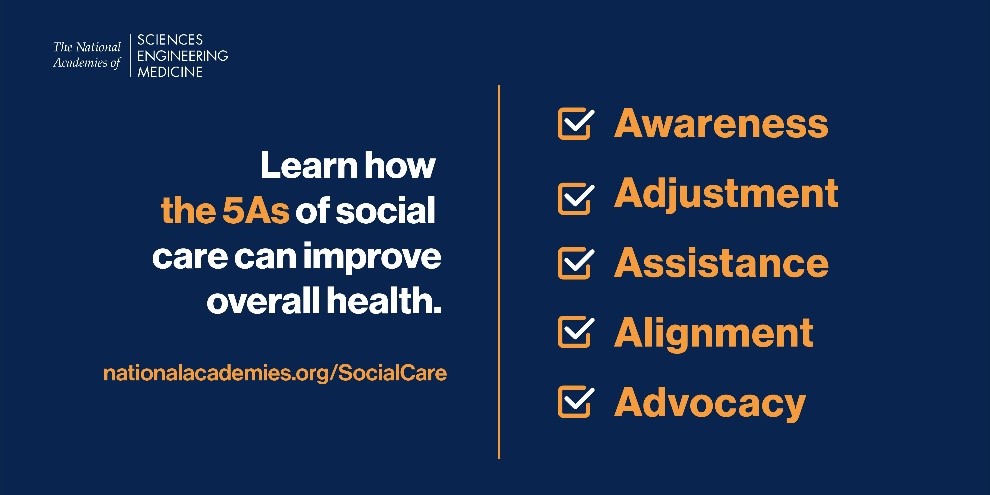
The system used to pay for health care today does not encourage the integration of health care and social care, nor can it adequately adapt to the trending shift toward value-based payments for care — paying for better quality and better health outcomes. New financing approaches are needed to enable the health care sector to engage in
activities that strengthen social care and community resources.

  • MCOs are obligated to provide care management, which includes the authority for MCOs to use their Medicaid funding to identify social care needs and link people to services.
  • MCOs can use their Medicaid funds to pay for social care as “in lieu of” services or as “value added services (for example, to provide medically tailored meals for a homebound individual or an air conditioner for a severely asthmatic child).
  • Some states require MCOs to contract with existing community-based organizations to provide services such as ombudsman (advocacy) services, nursing home eligibility assessments, and care management.
carenodes SDOH1
carenodes SDOH
carenodes SDOH

Cognitive Assessment & Care Plan Services

If your patient shows signs of cognitive impairment during a routine visit, Medicare covers a separate visit to more thoroughly assess your patient’s cognitive function and develop a care plan – use CPT code 99483 to bill for this service. 

Effective January 1, 2021, Medicare increased payment for these services to $282 (may be geographically adjusted) when provided in an office setting, added these services to the definition of primary care services in the Medicare Shared Savings Program, and permanently covered these services via telehealth. Use CPT code 99483 to bill for both in-person and telehealth services.

How Do I Get Started?

Detecting cognitive impairment is a required element of Medicare’s Annual Wellness Visit (AWV). You can also detect cognitive impairment as part of a routine visit through direct observation or by considering information from the patient, family, friends, caregivers, and others. You may also use a brief cognitive test and evaluate health disparities, chronic conditions, and other factors that contribute to increased risk of cognitive impairment.

If you detect cognitive impairment at an AWV or other routine visit, you may perform a more detailed cognitive assessment and develop a care plan during a separate visit. This additional evaluation may be helpful to diagnose a person with dementia, such as Alzheimer’s disease, and to identify treatable causes or co-occurring conditions such as depression or anxiety. 

Who Can Offer a Cognitive Assessment?  

Any clinician eligible to report evaluation and management (E/M) services can offer this service. Eligible providers include: 

  • Physicians (MD and DO)
  • Nurse practitioners
  • Clinical nurse specialists
  • Physician assistants

Where Can I Perform the Cognitive Assessment?   

You can perform the assessment at any of these locations:

  • Office or outpatient setting
  • Private residence
  • Care facility
  • Rest home
  • Via telehealth

What’s Included in a Cognitive Assessment? 

The cognitive assessment includes a detailed history and patient exam. There must be an independent historian for assessments and corresponding care plans provided under CPT code 99483. An independent historian can be a parent, spouse, guardian, or another individual who provides patient history when a patient isn’t able to provide complete or reliable medical history. 

Typically, you would spend 50 minutes face-to-face with the patient and independent historian to perform the following elements during the cognitive assessment: 

  • Examine the patient with a focus on observing cognition 
  • Record and review the patient’s history, reports, and records 
  • Conduct a functional assessment of Basic and Instrumental Activities of Daily Living, including decision-making capacity
  • Use standardized instruments for staging of dementia like the Functional Assessment Staging Test (FAST) and Clinical Dementia Rating (CDR)
  • Reconcile and review for high-risk medications, if applicable 
  • Use standardized screening instruments to evaluate for neuropsychiatric and behavioral symptoms, including depression and anxiety
  • Conduct a safety evaluation for home and motor vehicle operation 
  • Identify social supports including how much caregivers know and are willing to provide care
  • Address Advance Care Planning and any palliative care needs 

NOTES

Notes

Data reflect NCQA’s 2019 ratings of Medicaid managed care plans. The plans included in the NCQA data do not always match the MCOs in other tables in the Medicaid Managed Care Market Tracker, or they may appear under different names. Discrepancies may be due to differences across reports and sources, timeframes, and other factors. MCOs not accredited or rated by NCQA may be accredited or rated by other organizations.

The NCQA plan overall rating scale is 0-5 (0 is lower performance, 5 is higher performance). NCQA accreditation is as of June 30, 2018. For more information about how NCQA rates plans, please see NCQA’s methodology.

Sources

NCQA Health Insurance Plan Ratings 2018-2019 – Summary Report (Medicaid). Special Data Request, October 2019.

Definitions

Partial Data Reported: Plans with partial data do not receive a rating, but NCQA lists them in the ratings and shows their scores on the measures they report. A plan is considered to have partial data if it submits HEDIS and CAHPS measure data for public reporting, but has insufficient data for one or more measures, submits HEDIS data for public reporting but does not submit CAHPS data, or vice versa, or earned NCQA Accreditation without HEDIS data (health plan accreditation standards only) and did not submit HEDIS or CAHPS data for public reporting.

No Data Reported: Plans that submit results but do not report data publicly, or plans that report no HEDIS, CAHPS or accreditation information to NCQA, are given a rating status of “No Data Reported”.

Insufficient Data: Plan has “missing values” (i.e., NA or NB) in more than 50 percent of the weight of the measures used in the methodology.