Sample Letter (SB 418): Paper Claim in Process over 45 days
Dear Payer: Please be advised that this letter is to request final resolution of the claim/services in question. … We are aware that the Texas Prompt Payment law (28 TAC §§21.2801 – 21.2824) p
TO: [PAYER]
____________________
____________________
____________________
____________________
RE: Request for Claim Resolution
Patient: _______________________
Member ID: ____________________
Insured: _______________________
Date of Service: _________________
Amount: _______________________
Dear Payer:
Please be advised that this letter is to request final resolution of the claim/services in question.
It is believed that your organization has had the paper-submitted clean claim(s) in question pending and in your possession for 45 or more calendar days. All data elements required by Texas Law were present on the claim(s) when submitted.
We believe that failure to release payment may be a violation of Texas law.
We are aware that the Texas Prompt Payment law (28 TAC §§21.2801 – 21.2824) prohibits insurers from unnecessarily delaying claims processing. Payers have 45 days to (1) pay the total amount of a clean claim in accordance with its provider contract, (2) pay the undisputed portion and notify the provider in writing why the rest won’t be paid or (3) notify the provider in writing why the claims will not be paid.
If a carrier is unable to pay or deny a paper claim within 45 days, in whole or in part, and audits the claim to determine whether the claim is payable, the payer must notify the physician that the claim is being audited and pay 100% of the contracted rate.
Payers that violate these requirements are liable to a provider a graduated penalty in addition to the contracted rate and may be subject to an administrative penalty by the Texas Department of Insurance.
Since the paper claim(s) in question were received by your company over 45 days ago, we are requesting the following at this time:
For claims paid up to 45 days late, the contracted rate plus the lesser of 50% of the difference between the billed charges and the contracted rate or $100,000; or,
For claims paid 46-90 days late, the contracted rate plus the lesser of 100% of the difference between the billed charges and the contracted rate or $200,000; or,
For claims paid more than 90 days late, the contracted rate plus the lesser of 100% of the difference between the billed charges and the contracted rate or $200,000, plus 18% annual interest on the penalty amount.
Thank you for your prompt attention to this matter. Should you have any questions, please contact our office at ____________________________.
Health Net has grant funded a proposal by Insight Choices, in partnership with Carenodes, to expand virtual healthcare delivery capacity and accessibility. In response to the ongoing COVID-19 pandemic, Insight Choices, a coalition of psychiatric providers across California were awarded a $125,000 telehealth infrastructure expansion grant by Health Net.
The grant will help Insight Choices launch new telehealth technologies to increase its prevention and intervention efforts for patients with mental health conditions. Furthermore, availability of funding will enable the provision of crisis intervention services, mental and substance use disorder treatment, crisis counseling, and other related supports for communities impacted by the COVID-19 pandemic.
Earlier this year, Health Net announced it would award $13.4 million in immediate assistance for Medi-Cal providers to expand telehealth capacity and capabilities at California safety net clinics, Federally Qualified Health Centers (FQHC), and independent provider practices.
Providing increased access to care during this unprecedented time is critical to ensuring our most vulnerable populations stay healthy and safe. The amount of difficult news, confusion and tragedy surrounding all of us in a short period of time can feel insurmountable. Reaching out for help is incredibly important and telehealth is key to ensuring access to care is not interrupted.
Brian Ternan, President and CEO, Health Net of California and California Health & Wellness.
Recognizing the urgency of the situation, Insight Choices saw the need to increase its telehealth offering to benefit its patients who are coping with increased anxiety, deep depression and unfortunately, suicidal ideation. The organization is also seeing an increased need to provide mental health services for health care workers on the frontline of the pandemic.
“Health care providers throughout California are under incredible, and still increasing, strain as they work diligently to fight this pandemic, and for our patients, the strain they feel is just as, if not more difficult to handle,” said Robert Chang, DO, Medical Director & President at Insight Choices. “As we focus on mental health care and the emotional wellbeing of the Californians we serve, these funds will provide Insight Choices the support needed to deliver a robust response to the mental health needs exasperated by the COVID-19 pandemic.”
“Our nation’s health care providers are under incredible, and still increasing, strain as they fight the pandemic. Insight Choices plan for the COVID-19 Telehealth Program is a critical tool to address this national emergency—starting in California and the counties we serve with a focus on mental health care and emotional wellbeing. This grant will provide Insight Choices, and the communities it serves, vital funding to assist in a more robust response to the mental health crisis exasperated by the COVID-19 pandemic,”
Alex Yarijanian CEO of Carenodes and Interim COO of Insight Choices
Social distancing has led many across the nation to seek out health providers that offer telehealth to ease the anxiety of walking into a clinic, and this is no different for mental health clinics. Telehealth can also bring costs down for some patients and is a benefit to those without a mode of transportation. However, many providers and organizations that serve Medi-Cal patients face financial barriers to expand the implementation, and this is where organizations like Health Net come in.
Insight Choices and Carenodes, will support infrastructure modernization efforts to include telecommunications services, information services and devices necessary to enable the provision of telehealth services during this emergency period. In addition, such capacity building funds have the potential to substantially stimulate the deployment of innovative access to care models.
About Insight Choices Insight Choices Psychiatry and Behavioral Health Services offer a full range of assessment and treatment options to address the mental, emotional and behavioral problems that occur throughout life. The group’s programs encompass a comprehensive view of mental health integrating the biological, psychological and social dimensions of care. Serving populations across California with expanded hours (nights and weekends), telehealth availability, evidence-based treatment modalities, and engagement via technology and virtual means, Insight Choices leads access to care.
About Carenodes Carenodes leads healthcare infrastructure development efforts around integrating nonmedical services within mainstream healthcare (primary care, behavioral, substance abuse, payers). It focuses on developing provider networks with the capacity to deliver on the promise of a ‘biopsychosocial model of wellbeing’ and equity in access to healthcare.
About Health Net: Health Net believes every person deserves a safety net for their health, regardless of age, income, employment status or current state of health. Founded 40 years ago, we remain dedicated to transforming the health of our community, one person at a time. Today, Health Net’s 3,000 employees and 85,000 network providers serve more than 3 million members. That’s nearly 1 in 12 Californians. Health Net of California, Inc., Health Net Life Insurance Company and Health Net Community Solutions, Inc. These entities are wholly owned subsidiaries of Centene Corporation (NYSE: CNC), a Fortune 100 company providing health coverage to more than 20 million Americans.
Health Net’s telehealth grant gives members an alternative and convenient means to address their mental healthcare concerns
Health Net has grant funded a proposal by Insight Choices, in partnership with Carenodes, to expand virtual healthcare delivery capacity and accessibility. In response to the ongoing COVID-19 pandemic, Insight Choices, a coalition of psychiatric providers across California were awarded a $125,000 telehealth infrastructure expansion grant by Health Net.
The grant will help Insight Choices launch new telehealth technologies to increase its prevention and intervention efforts for patients with mental health conditions. Furthermore, availability of funding will enable the provision of crisis intervention services, mental and substance use disorder treatment, crisis counseling, and other related supports for communities impacted by the COVID-19 pandemic.
Earlier this year, Health Net announced it would award $13.4 million in immediate assistance for Medi-Cal providers to expand telehealth capacity and capabilities at California safety net clinics, Federally Qualified Health Centers (FQHC), and independent provider practices.
“Providing increased access to care during this unprecedented time is critical to ensuring our most vulnerable populations stay healthy and safe. The amount of difficult news, confusion and tragedy surrounding all of us in a short period of time can feel insurmountable. Reaching out for help is incredibly important and telehealth is key to ensuring access to care is not interrupted.”
Brian Ternan, President and CEO, Health Net of California and California Health & Wellness.
Recognizing the urgency of the situation, Insight Choices saw the need to increase its telehealth offering to benefit its patients who are coping with increased anxiety, deep depression and unfortunately, suicidal ideation. The organization is also seeing an increased need to provide mental health services for health care workers on the frontline of the pandemic.
“Health care providers throughout California are under incredible, and still increasing, strain as they work diligently to fight this pandemic, and for our patients, the strain they feel is just as, if not more difficult to handle,” said Robert Chang, DO, Medical Director & President at Insight Choices. “As we focus on mental health care and the emotional wellbeing of the Californians we serve, these funds will provide Insight Choices the support needed to deliver a robust response to the mental health needs exasperated by the COVID-19 pandemic.”
“Our nation’s health care providers are under incredible, and still increasing, strain as they fight the pandemic. Insight Choices plan for the COVID-19 Telehealth Program is a critical tool to address this national emergency—starting in California and the counties we serve with a focus on mental health care and emotional wellbeing. This grant will provide Insight Choices, and the communities it serves, vital funding to assist in a more robust response to the mental health crisis exasperated by the COVID-19 pandemic,”
Alex Yarijanian CEO of Carenodes and Interim COO of Insight Choices
Social distancing has led many across the nation to seek out health providers that offer telehealth to ease the anxiety of walking into a clinic, and this is no different for mental health clinics. Telehealth can also bring costs down for some patients and is a benefit to those without a mode of transportation. However, many providers and organizations that serve Medi-Cal patients face financial barriers to expand the implementation, and this is where organizations like Health Net come in.
Insight Choices and Carenodes, will support infrastructure modernization efforts to include telecommunications services, information services and devices necessary to enable the provision of telehealth services during this emergency period. In addition, such capacity building funds have the potential to substantially stimulate the deployment of innovative access to care models.
About Insight Choices Insight Choices Psychiatry and Behavioral Health Services offer a full range of assessment and treatment options to address the mental, emotional and behavioral problems that occur throughout life. The group’s programs encompass a comprehensive view of mental health integrating the biological, psychological and social dimensions of care. Serving populations across California with expanded hours (nights and weekends), telehealth availability, evidence-based treatment modalities, and engagement via technology and virtual means, Insight Choices leads access to care.
About Carenodes Carenodes leads healthcare infrastructure development efforts around integrating nonmedical services within mainstream healthcare (primary care, behavioral, substance abuse, payers). It focuses on developing provider networks with the capacity to deliver on the promise of a ‘biopsychosocial model of wellbeing’ and equity in access to healthcare.
About Health Net: At Health Net, we believe every person deserves a safety net for their health, regardless of age, income, employment status or current state of health. Founded 40 years ago, we remain dedicated to transforming the health of our community, one person at a time. Today, Health Net’s 3,000 employees and 85,000 network providers serve more than 3 million members. That’s nearly 1 in 12 Californians. Health Net of California, Inc., Health Net Life Insurance Company and Health Net Community Solutions, Inc. These entities are wholly owned subsidiaries of Centene Corporation (NYSE: CNC), a Fortune 100 company providing health coverage to more than 20 million Americans.
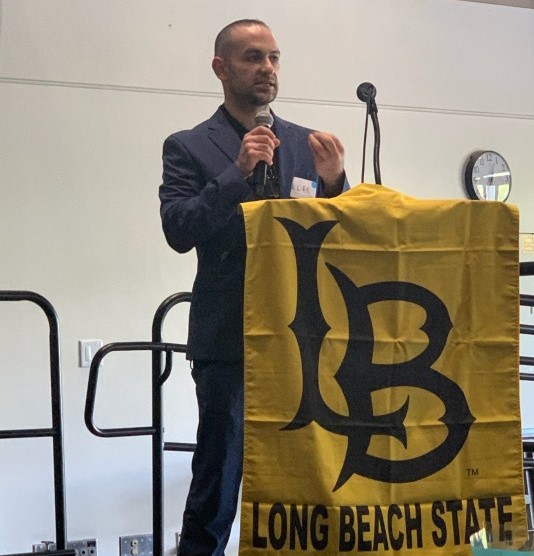
I had the distinct opportunity to serve as a judge for CSULB’s College Bowl 2020, side-by-side with top industry leaders from Kaiser, AltaMed, medical informatics field, the VA, and others.
An attendee asked a great question which I’d like to share with my network.
QUESTION
“Given the undergraduate healthcare administration students are all looking into careers as managers and administrators in healthcare, what are the biggest issues that you see with hiring millennial managers today, how are you and your management team breaking these obstacles, and what characteristics separate a “manager” and a ‘millennial manager’?”
ANSWER
I don’t see a distinction between a ‘manager’ and a ‘millennial manager’. With that being said, yes, there are challenges surrounding the matter. Being a millennial myself, I think one has to work harder in boardrooms to be taken seriously. As a director (managed care) responsible for negotiating on behalf of over 20K pts, several years ago, while most executives (external as well as internal) were supportive (and appreciated a ‘new/fresh face’) I encountered counterparts who were somewhat — seemingly — condescending …. such that during a lunch meeting, a side-joke was made regarding how I’m “… a baby”.
I learned not to react to both implicit and explicit biases surrounding my relative youth. And look where I am now. C-suite serving over 100K across multiple markets.
And look where I am now. C-suite serving over 100K patients across multiple markets.
Do not be discouraged. And try not to see yourself as anything different from your role based on your age alone. Stay to metrics to demonstrate objective performance. Realize that your job as a leader is to set a clear direction, provide resources for team success, and let the team perform while removing barriers which will inevitably surface. Always reflect on the impact and ‘affect’ you have on any place of work (ie.: during your interactions, do folks walk away with a positive or negative net experience). Know that leaders are to inspire their staff and business partners in a given environment).
About 90% of my workforce, across the decade I’ve been in leadership from provider to payer, has been comprised of ‘baby boomers’.
Know where to throw your weight before throwing your weight around. Listen more as opposed to talking. Know your customers (internal) and have regular 1:1s with your team members to build that relationship. Do not take an authoritative approach as this will backfire on you. Make it about the team, not you. Be responsive to their needs and they will be responsive to yours.
We do not, and should not, discriminate based on age. No matter the age (baby boomer, millennial, or otherwise).
We do not, and should not, discriminate based on age. No matter the age (baby boomer, millennial, or otherwise). We look for leadership skills and ability to align with overall organizational objectives and strategies.
Do not be self-conscious re: your age as this will show right away.
The ‘biggest issue’ is a general lack of experience (naturally). Focus on building experience and lead your career based on metrics you have enumerate on your resume. You can always reach out to me for guidance/direction when you get stuck.
I invite my network to add any pointers I might have missed.
As a longtime healthcare administrator, from managing 28 safety net clinics across CA and TX, to 14 hospitals, over 50 skilled nursing facilities, and 1 national health plan, I’ve seen the inner workings of our ‘systems’ and have a burning passion to contribute to as many solutions as possible.
Healthcare administration is tribal, disjointed, and woven with counterproductive (many times perverse) incentives which go beyond what any ‘tech’ innovation can address. It bothers me when I see nice (undoubtedly creative and expensive) posts and advertisements alleging ‘integration’ and providing claims of having reached new heights while, as a chief officer, I’m sitting here faced with issues of barriers of access to care, onerous requirements for mental health services, and payers (health plans) not paying for preventive screenings unless one fights for these to be paid for.
To my point of ‘tribal knowledge’, had I not managed Humana markets from the payer-side, I would not be able to advocate on behalf of 100K patients we see in our system today.
Integration is a challenge beyond technology. It is painful to see ‘disruptors’ out of firms such as Snapchat and Nokia providing apps to healthcare providers (at incredibly high costs), vacuuming millions of investment dollars, only to cause more issues than solutions. I’ve seen this time and time again.
Until such time payers pay for preventive and integrative care (not just on the med/surg side but within the mental health and substance abuse verticals), zero amount of technological innovations and glorified health technology startups will move the needle in any meaningful, responsible, and effective form.
Sample Employer Performance Standards for Behavioral Health Developed by Catalyst for Payment Reform
In 2018, based on input from eight purchasers and a subject matter expert, Catalyst for Payment Reform developed a tool for purchasers to assess how well partners are meeting their needs when it comes to access, quality, and integration in mental healthcare. The tool includes evaluation questions and clear specifications for what a purchaser should expect to see moving forward in these key areas.
Sample of standards developed includes:
80% of providers in a network should accept new patients at any given time.
Patients should be offered an urgent mental health appointment within 48 hours.
Health plan updates provider directory on a daily basis.
Member satisfaction with care provided should be 85% or higher.
Quality must be a requirement for receiving a high-performance provider designation.
Health plans should conduct site visits or audits of 25% of providers every year.
#IBELIEVE in Maternal Mental Health Access and I will fight alongside you each and every step of the way.
Closing gaps in maternal mental health care seems like a no-brainer but, just like much of the healthcare industry, we’ve been slow to adapt and even slower in adoption.
Slow at adapting to a changing world and population needs.
Slow to adopt reasonably sound new technologies, interventions, and process innovations.
We cannot leave our mothers behind! As such, the following guidance is targeted towards payers and health insurance companies — and for us all (from community member to healthcare provider) to hold payers accountable.
2020 Mom believes change is possible in maternal mental health care. If you also believe change is possible, join us!
Here are the steps health insurance companies can take to support maternal mental health (MMH)
HEALTH PLANS & PAYERS:
Institute a case management/care coordination program, allowing obstetricians to refer moms immediately into the program who screen positive for depression, anxiety or bi-polar disorder. Medicaid plan case managers/care coordinators should also address social determinants of health, like food and housing insecurity and safety.
Inform obstetricians how to bill for screening.
Inform obstetricians how to bill for treatment (brief intervention/medication management).
Provide telepsychiatry patient to provider services for all patients with bi-polar disorder, treatment resistant depression, or severe mental illness as a standard.
Inform obstetricians that they should be treating basic depression and anxiety as prescribers when necessary, and how they can consult with a reproductive psychiatrist and bill for their time.
Reimburse obstetrians and hospitals who staff LCSWs or other talk therapists in their offices.
Cover digital therapuetics and explain to providers how to prescribe use of these tools.
MENTAL HEALTH INSURANCE COMPANIES
Identify via an attestation, on the provider credentialing form and at a recredentialing for existing providers, which providers have taken at least 8 hours of a certificate based training in maternal mental health and have 20 practice hours treating MMH disorders.
Pay providers who have earned a PMH designation (the board test provided by Postpartum Support International) higher rates.
Monitor whether you have sufficient MMH providers based on child bearing age women and location of these women in the service area and recruit as needed.
Be available to coordinate with case managers at medical insurers.
Reimburse birth hospitals or medical clinics that provide support groups for maternal mental health disorders, NICU moms/parents that are clinician or certified peer specialist lead.
Authorize services for MMH specific outpatient day treatment programs and inpatient programs. Work to recruit such programs in the provider network.
2020 Mom believes change is possible in maternal mental health care. If you also believe change is possible, join us.
A LOOK INTO (MANAGED) BEHAVIORAL HEALTHCARE: AUDITS
A trending issue has popped up in my inbox and I thought I’d take a quick minute to post this crude blog article: Out of Network Behavioral Health Providers receiving Audit Requests from Non-Contracted Health Plans.
More and more audits seem to involve payers looking at psychologists who are out-of-network providers. Such psychologists may ask what gives the company the right to audit when they have no provider contract with the company. (Provider contracts typically require that you comply with the company’s audit requests.)
The answer is that while you may not have audit obligations to the payer in this situation, the patient’s contract with the company may require the patient to allow that his or her care and records be audited in order for the patient to be reimbursed or to have further care authorized. The payer might also claim that it has the right to determine if your out-of-network services met the medical necessity definition in the patient’s insurance plan. Generally, the patient’s best interest is served by complying with audit requests that are reasonably aimed at determining whether the patient received appropriate out of-network services.
I help providers navigate such issues all the time — informed by both my payer and provider side management experience — yet I’m still surprised at the creative ways managed care organizations seek recoups, audits, and claw-backs.
Never ceases to amaze me, our industry.
We need reduction in provider burden, not an increase. Onerous paperwork and requests from payers to conform to various policies and ‘edits’ create an undue strain on our increasingly stressed delivery systems. If I can help, let me know — whether it’s making connections via my healthcare industry ‘contact book’ and/or reaching into my long list of tips/tricks to utilize in dealing with any given issue you, as providers, might be facing.
PLEASE NOTE: Legal issues are complex and highly fact specific and require legal expertise that cannot be provided by any single article. In addition, laws change over time. The information in this posting should not be used as a substitute for obtaining personal legal advice and consultation prior to making decisions regarding individual circumstances.
On October 24, 2018, President Trump signed H.R. 6 into law. More formally known as the Substance Use Disorder Prevention that Promotes Opioid Recovery and Treatment (SUPPORT) for Patients and Communities Act, H.R. 6 is a follow-up to the last bipartisan opioid crisis-focused legislation, the 2016 Comprehensive Addiction and Recovery Act (CARA).
Like CARA, the SUPPORT Act takes sweeping aim at the opioid crisis, focusing on numerous aspects of opioid prevention, treatment, and recovery, including expansion of opioid use disorder (OUD) treatment access and capacity in residential and inpatient care, medication assisted treatment (MAT), and via telehealth and improving medical education and training resources for health care providers to better address addiction, pain, and the opioid crisis.
The takeaways for hospitals and health systems from H.R. 6 include both important specific requirements and strategic trends in addressing opioid related activities.
Hospitals and health systems should pay particular attention to new regulatory and reimbursement requirements, as well as the evolution in best practices reflected in the SUPPORT Act.
Expanding Focus on Social Determinants Relevant to OUDs
Expanding Focus on Social Determinants Relevant to OUDs
H.R. 6 highlights an investment into and focus on other critical social determinants relevant to OUDs.
Section 7183, the CAREER Act, is intended to improve resources and wraparound support services for individuals in recovery from a SUD in the transition from treatment programs to independent living and reintegration into the workforce.
Section 7031, the Ensuring Access to Quality Sober Living Act, requires HHS to develop best practices for operating recovery housing (shared living environments free from alcohol and illegal drug use and centered on peer support and connection to services that promote recovery from substance-use disorders).
The ability to focus on social determinants appears to be an essential piece of supporting the initial decision to seek treatment and preventing relapse. At the same time, traditional reimbursement mechanisms do not provide funds to meet these needs.
Traditional reimbursement mechanisms do not provide funds to meet these needs.
Hospitals and health systems should consider opportunities to identify resources offering housing and transitional support for patients in treatment and recovery from OUDs and to provide information and as seamless a transition as possible.
Perhaps the biggest opportunity for all health care organizations is to improve training to prevent opioid dependency.
Section 7101 of H.R. 6 expands medical education and training resources for health care providers to better address addiction, pain, and the opioid crisis.
Section 6092, the Combating Opioid Abuse for Care in Hospitals (COACH) Act, requires CMS to publish guidance for hospitals on pain management and OUD prevention strategies for Medicare beneficiaries.
Additional lessons for hospitals are likely to be forthcoming.
Section 6104 prohibits hospital patient pain surveys (unless the questions address the risks of opioid use and the availability of non-opioid alternatives).
In their place, the Treatment, Education, and Community Help (TEACH) to Combat Addiction Act, Section 7101, requires SAMHSA to designate Regional Centers of Excellence in SUD Education to improve pain management and SUD education by developing evidence-based curricula for health care professional schools.
Section 7121 also requires SAMHSA to award grants to establish or operate at least ten comprehensive opioid recovery centers across the country to conduct outreach and provide a full continuum of treatment and recovery services, including job-placement assistance.
Training also extends to Medicare beneficiaries:
Section 6021 requires CMS to provide Medicare beneficiaries with educational resources regarding opioid use and pain management, as well as descriptions of covered alternative (non-opioid) pain management treatments.
Some hospitals have focused specific training efforts on naloxone administration, enabling greater numbers of patient family members and loved ones, as well as first responders, to act quickly in response to overdoses.
H.R. 6 is extensive. It highlights legal changes not only related to evolving compliance requirements but also to best practices in reducing opioid risks and improving outcomes in treatment of opioid and other substance use disorders.
It really does take a village.
—————————————————————————————————————
References:
Pub. L. No. 115-271 (2018).
Pub. L. No. 114-198.
Dep’t of Health and Human Servs., Office for Civil Rights, How HIPAA Allows Doctors to Respond to the Opioid Crisis, https://www.hhs.gov/ sites/default/files/hipaa-opioid-crisis.pdf.











 Alex Yarijanian