Introducing the Care MAP Tool: A Comprehensive Guide

Introducing the Care MAP Tool, designed to support healthcare providers in managing complex care needs. This user-friendly, Excel-based tool offers a structured framework for effective care coordination, resource allocation, and patient management. With modules for an overview and practical scenarios, plus a comprehensive resource library and FAQ section, the Care MAP Tool enhances care strategies and improves patient outcomes. Download it today and elevate your care management practices.

Effective care management is crucial in today’s complex healthcare landscape. To support healthcare professionals and organizations, we are excited to introduce the Care MAP Tool, a valuable resource designed to aid in complex care management. This blog will provide an overview of the Care MAP Tool, walk you through an example scenario, and offer access to a resource library and frequently asked questions (FAQ) section.

Module 1: Care MAP Overview

The Care MAP (Management and Planning) Tool is designed to support healthcare providers in managing and planning care for patients with complex health needs. This tool provides a structured framework to help clinics navigate the intricacies of care coordination, resource allocation, and patient management. Here’s what you can expect from the Care MAP Tool:

  • Framework for Complex Care Management: The tool offers a comprehensive structure to address the multifaceted needs of patients requiring intensive care management.
  • User-Friendly Interface: The Excel-based tool is intuitive and easy to navigate, ensuring that healthcare providers can quickly integrate it into their workflows.
  • Scalable and Adaptable: Whether you’re a small clinic or a large healthcare organization, the Care MAP Tool can be scaled and adapted to fit your unique needs.

Module 2: Example Scenario

To illustrate the practical application of the Care MAP Tool, let’s walk through an example scenario:

Scenario: Managing a Patient with Multiple Chronic Conditions

  1. Patient Overview:
    • Name: Jane Doe
    • Age: 65
    • Conditions: Diabetes, Hypertension, Chronic Obstructive Pulmonary Disease (COPD)
  2. Initial Assessment:
    • Medical History Review: Gather comprehensive information about Jane’s medical history, including past treatments, hospitalizations, and medications.
    • Social Determinants of Health: Assess factors such as living conditions, access to transportation, and social support.
  3. Care Coordination:
    • Interdisciplinary Team: Form a care team that includes primary care physicians, specialists, nurses, social workers, and community health workers.
    • Care Plan Development: Create a personalized care plan that addresses Jane’s medical and social needs, with clear goals and timelines.
  4. Monitoring and Evaluation:
    • Regular Check-ins: Schedule regular appointments and follow-ups to monitor Jane’s progress.
    • Adjustments: Modify the care plan as needed based on Jane’s response to treatment and changes in her condition.

Resource Library

The Resource Library is a curated collection of materials to further support your use of the Care MAP Tool. Here, you’ll find:

  • Guides and Manuals: Detailed instructions on how to use the Care MAP Tool effectively.
  • Case Studies: Real-world examples of the tool in action, showcasing its impact on patient outcomes.
  • Training Videos: Step-by-step video tutorials to help you and your team get up to speed quickly.

FAQ

To ensure you have all the information you need, we’ve compiled a list of frequently asked questions:

Q1: Who can use the Care MAP Tool?
A1: The tool is designed for healthcare providers, including clinicians, care coordinators, and administrative staff.

Q2: Is there a cost associated with the Care MAP Tool?
A2: No, the Care MAP Tool is available for free download.

Q3: How do I get support if I encounter issues with the tool?
A3: Support is available through our online helpdesk. You can also refer to the Resource Library for troubleshooting guides.

Care MAP Tool Download

By using the Care MAP Tool, you acknowledge that you have read and agree to the disclaimer below. If you share the tool, ensure that all individuals given access to it have reviewed and agreed to the disclaimer language before using it for any purpose.

Disclaimer: The Care MAP Tool is intended as a general framework to support considerations around complex care management in a clinic setting. It is not meant for final staffing, clinical, administrative, operational, and/or financial decision-making. Information obtained from this tool is not and should not be taken as legal or financial advice and is not a substitute for consulting a qualified professional. Community Initiatives does not accept responsibility for any loss that may arise from reliance on this tool.

Source Link:

Download Materials:


Feel free to reach out with any questions or feedback about the Care MAP Tool. Happy planning!
CAQH Index Benchmarks & Time Spent on Administrative Work in Healthcare

The CAQH Index benchmarks adoption, volume, cost savings opportunities and spend for transactions along the administrative workflow. The following metrics help measure progress towards an automated workflow. By tracking progress, the industry can more easily identify barriers that may be delaying automation and administrative simplification and focus efforts on them.

2021 CAQH INDEX®

The CAQH Index benchmarks adoption, volume, cost savings opportunities and spend for transactions along the administrative workflow.  

The CAQH Index benchmarks adoption, volume, cost savings opportunities and spend for transactions along the administrative workflow. The following metrics help measure progress towards an automated workflow. By tracking progress, the industry can more easily identify barriers that may be delaying automation and administrative simplification and focus efforts on them.

ADMINISTRATIVE WORKFLOW


While COVID-19 touched all healthcare professionals, the pandemic impacted the medical and dental administrative workflows differently.

The following touches on MEDICAL and DENTAL.

Utilization

Policies developed by federal and state entities to curb the spread of COVID-19 resulted in lower utilization for both industries as people delayed, or went without, medical care. In general, lower utilization led to lower transaction volumes. Smaller dental practices were hit particularly hard by lower utilization as many offices were forced to close for several months or close permanently.

Spend

Although electronic adoption and volume increased for both industries, the spend associated with conducting administrative transactions varied. While the dental industry saw a drop in spend, the medical industry experienced an increase in spend as it dealt with more complicated factors related to COVID-19

Automation

As remote work increased, many medical and dental staff became more reliant on the use of electronic transactions to conduct business. Staff no longer had access to resources used to conduct manual transactions. Because of this, both industries saw an increase in electronic adoption.

Telemedicine


For the medical industry, the loss in volume was counterbalanced by the increase in telemedicine. Telemedicine expanded access to care while reducing exposure to the virus for staff and patients. Health plans and providers worked together to understand and confirm new requirements and varying codes around telemedicine which often resulted in costly and timely phone calls and manual work. And while manual volume dropped, manual transactions became more expensive, increasing overall spend and the
cost savings opportunity.

While manual volume dropped, manual transactions became more expensive, increasing overall spend and the cost savings opportunity.

While manual volume dropped, manual transactions became more expensive, increasing overall spend and the cost savings opportunity.

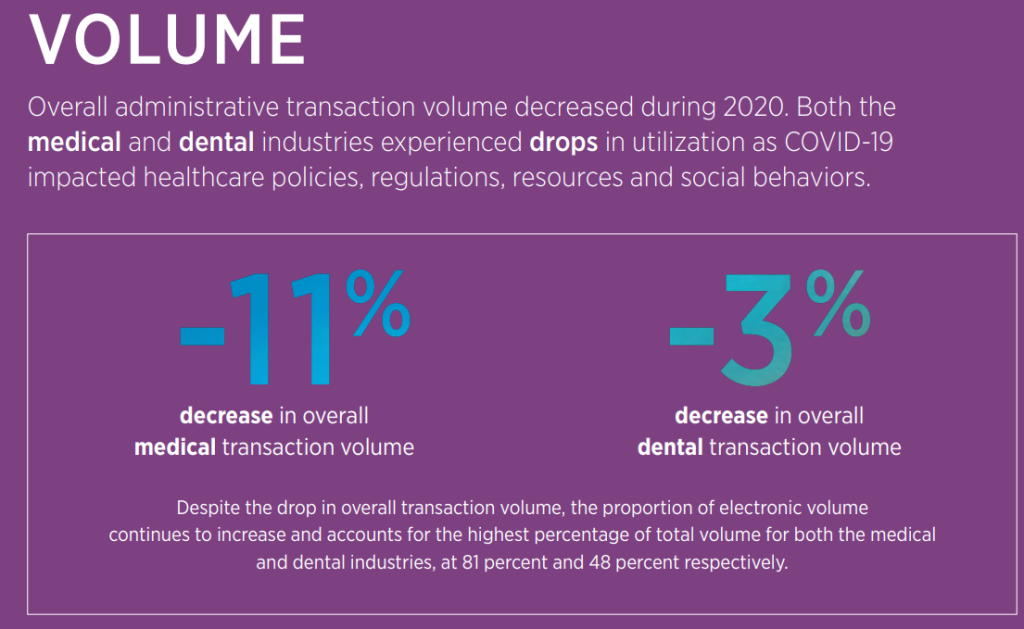
VOLUME

Overall administrative transaction volume decreased during 2020. Both the
medical and dental industries experienced drops in utilization as COVID-19
impacted healthcare policies, regulations, resources and social behaviors.

SPEND

Despite the decrease in overall medical transaction volume and growth in electronic adoption, total annual medical spend increased (12%) as manual transactions required more intensive intervention from providers to ensure that newly implemented requirements and codes were executed correctly and that patient medical records were current and accurate. Conversely, dental spending decreased due to lower utilization often resulting in office closures.

TIME (WASTED!)

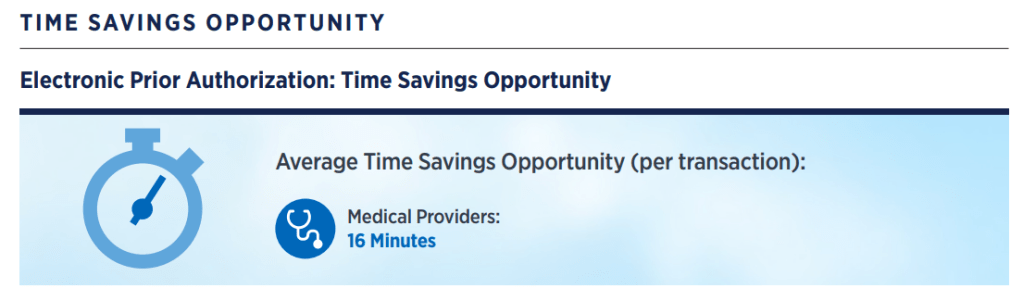
Time Savings Opportunity — The time that providers could save by switching the remaining partially electronic and fully manual time to conduct a transaction to a fully electronic time.

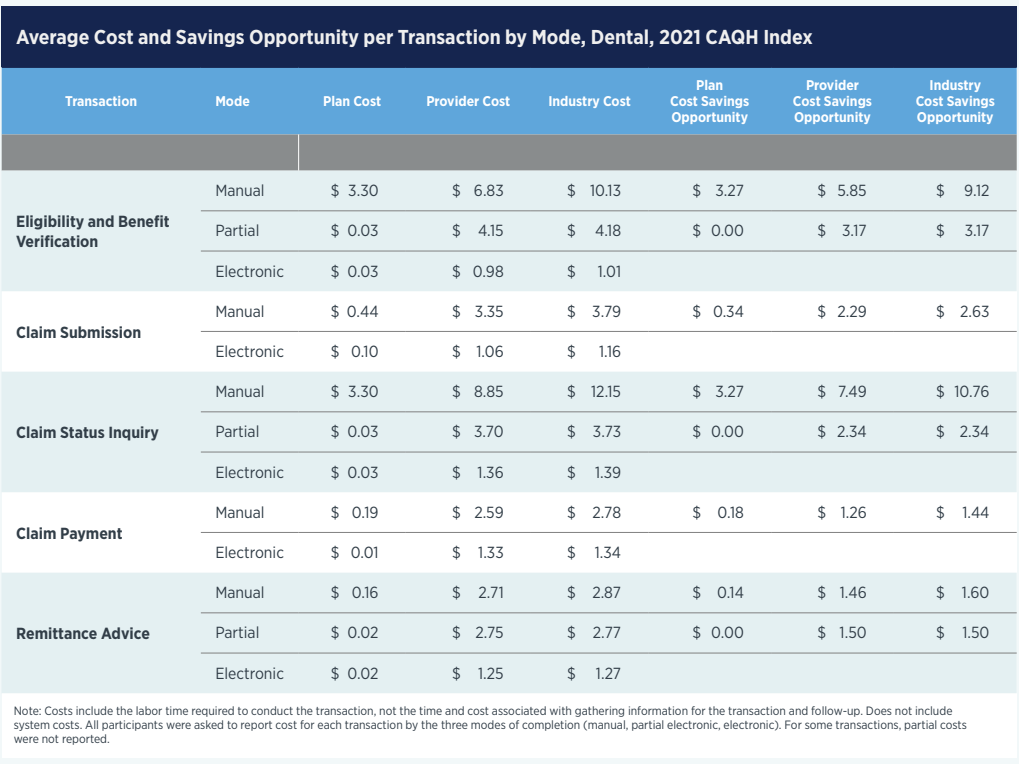
Average Cost and Savings Opportunity per Transaction by Mode, Dental, 2021 CAQH Index

CMS Bundled Payments for Care Improvement (BPCI) Initiative: A Discussion on Bundled Payments

There is a large disconnect between what occurs after a patient is discharged from a hospital (acute) and what occurs thereafter. The quality of care is entirely unmanaged, uncontrolled, and unmonitored. Moreover, the patient is placed at greater risk whe

Understanding the CMS Bundled Payments for Care Improvement (BPCI) Initiative

In recent years, healthcare has been undergoing a significant transformation, driven by the need to improve care delivery and reduce costs. One of the key initiatives in this transformation is the Bundled Payments for Care Improvement (BPCI) program, introduced by the Centers for Medicare & Medicaid Services (CMS). The BPCI program is part of a broader effort to move the U.S. healthcare system towards value-based care, focusing on quality outcomes rather than the volume of services.

What is the BPCI Initiative?

The BPCI initiative was launched as part of the Affordable Care Act (ACA), which allowed the establishment of the Center for Medicare and Medicaid Innovation. The goal of this center is to pilot and expand innovative payment models that improve healthcare quality while reducing costs. BPCI is one of the many alternative payment models (APMs) being tested to align financial incentives with the quality of care provided, particularly in the post-acute care (PAC) setting.

The BPCI program focuses on bundled payments, which means that instead of paying for each service separately, healthcare providers receive a single, comprehensive payment for an entire episode of care. This “bundle” covers all services related to a patient’s treatment, including post-hospitalization care, for a specified period (e.g., 30 or 90 days). The goal is to incentivize providers to deliver coordinated, high-quality care that reduces unnecessary services and prevents avoidable readmissions.

Why Focus on Post-Acute Care?

One of the most challenging areas of healthcare to manage, particularly within the Medicare Fee-For-Service (FFS) program, is post-acute care. After patients are discharged from the hospital, they often require further care in settings such as inpatient rehabilitation facilities (IRFs), skilled nursing facilities (SNFs), or home health agencies (HHAs). The costs and quality of care in these settings vary significantly across the country, contributing to wide regional disparities in Medicare spending. In fact, 73% of the variation in Medicare spending is attributed to differences in post-acute care settings.

The BPCI initiative specifically targets these post-acute care settings because of the high cost and the potential for improvement. For example, about 20% of Medicare patients are readmitted to the hospital within 30 days of discharge, and research suggests that 75% of these readmissions could be prevented with better care coordination.

The BPCI Models

The BPCI initiative includes four different models, each offering a different approach to bundled payments:

  1. Model 1: Retrospective Acute Care Hospital Stay Only – This model focuses on hospital costs for acute care stays.
  2. Model 2: Retrospective Acute and Post-Acute Care Episode – In this model, hospitals are financially responsible for both the acute care and all post-acute care services provided within 30 or 90 days of discharge.
  3. Model 3: Retrospective Post-Acute Care Only – This model places post-acute care providers (e.g., SNFs, HHAs) at financial risk for the services they provide after a hospital discharge.
  4. Model 4: Prospective Acute Care Hospital Stay Only – In this model, hospitals receive a single, upfront payment for an acute care stay, and they cannot bill for any additional services, even if the patient is readmitted within 30 days.

Model 2 is the most complex and widely adopted model, as it requires hospitals to manage the entire episode of care, including both acute and post-acute services. The financial risk is reconciled retrospectively, meaning that CMS reviews the total cost of care after the episode is complete and compares it to a pre-determined target price. If the costs are lower than the target, the hospital may share in the savings; if the costs are higher, the hospital is responsible for the excess.

Implementation Strategies for Success

To succeed in the BPCI initiative, hospitals and post-acute care providers need to collaborate closely. Many hospitals are implementing strategies such as narrowing their networks to include only high-performing post-acute care providers. This ensures that patients are discharged to facilities with strong track records in quality care and low readmission rates.

Hospitals are also using tools like patient choice letters, which list all available post-acute care providers but highlight those that have been vetted for quality. This approach, known as “soft steerage,” helps guide patients toward the best providers without restricting their choices.

In addition to collaboration, data sharing and technology play a crucial role in the success of BPCI. Hospitals need visibility into the patient’s care journey after discharge, which can be facilitated through electronic health records and other data integration tools. This allows for better coordination and monitoring of patient outcomes across the continuum of care.

Challenges and Opportunities

While the BPCI initiative offers significant opportunities for improving care and reducing costs, it also presents challenges. One major issue is the complexity of managing bundled payments, especially with the retrospective reconciliation process that introduces delays in financial feedback. Hospitals need to track performance in real-time and adjust their strategies based on ongoing data, rather than waiting for quarterly reconciliations from CMS.

Another challenge is managing high-risk patients and outlier cases, which can significantly skew financial outcomes. However, as bundled payment models continue to evolve and expand, hospitals that proactively adapt to these challenges will be better positioned for success in the shifting healthcare landscape.

Conclusion

The BPCI initiative is an important step towards a value-based healthcare system, particularly in managing the costly and often fragmented post-acute care segment. By aligning financial incentives with quality outcomes, the BPCI program encourages providers to deliver more coordinated, efficient care, reducing unnecessary services and preventable readmissions.

As bundled payment models continue to expand, healthcare providers who embrace this shift now will be better prepared for the future. By focusing on collaboration, data integration, and patient-centered care, hospitals can succeed in the BPCI initiative and contribute to a more sustainable healthcare system.