Introducing Alex Yarijanian: A Visionary Leader Shaping the Future of Healthcare

Alex Yarijanian, CEO of Carenodes, has expertise in the healthcare industry, particularly in the areas of customer building, senior care, managed care, and value-based care. Here are some general steps you can take to build your own customer based on these topics:

Alex Yarijanian, CEO of Carenodes, has expertise in the healthcare industry, particularly in the areas of customer building, senior care, managed care, and value-based care. Here are some general steps you can take to build your own customer based on these topics:

1. Understand your target audience: Identify the specific demographic or market segment you want to target, such as seniors or healthcare entrepreneurs. Research their needs, preferences, pain points, and behaviors to better understand how to tailor your offerings to meet their demands.

2. Develop a value proposition: Clearly articulate the unique value your product or service offers to your target audience. Highlight how it solves their problems, improves outcomes, or enhances their experience compared to existing solutions. Align your value proposition with the principles of value-based care and biopsychosocial models of well-being.

3. Build relationships: Cultivate relationships with key stakeholders in the healthcare industry, including patients, caregivers, healthcare providers, payers, and policymakers. Attend conferences, industry events, and networking opportunities to establish connections and raise awareness about your offerings. Consider collaborating with other organizations or thought leaders in the field to expand your reach.

4. Leverage technology and innovation: Embrace digital solutions, ambient assisted living technologies, and cognitive health tools to enhance the quality and accessibility of your products or services. Stay informed about the latest advancements in the healthcare industry and adopt relevant technologies that can improve outcomes for your customers.

5. Provide exceptional customer experience: Focus on delivering a seamless and personalized experience for your customers. Consider implementing concierge services or managed care approaches to ensure their needs are met comprehensively. Strive for high customer satisfaction by addressing their concerns, providing timely support, and continuously improving your offerings based on their feedback.

6. Demonstrate outcomes and value: Collect and analyze data to showcase the positive impact of your products or services. Emphasize how your solutions align with value-based care principles by highlighting improved patient outcomes, reduced costs, and enhanced patient experience. Use case studies, testimonials, and real-world evidence to demonstrate the value you bring to your customers.

7. Stay updated and adaptable: Continuously educate yourself about the evolving healthcare landscape, regulatory changes, and industry trends. Adapt your strategies and offerings accordingly to remain competitive and address emerging needs in the market.

Remember that these steps are general guidelines, and it’s important to customize your approach based on your specific business model, target audience, and industry regulations. Alex Yarijanian’s keynotes, podcast episodes, and live training sessions can provide further insights into these topics and help you develop a more comprehensive understanding of customer building in the healthcare industry.
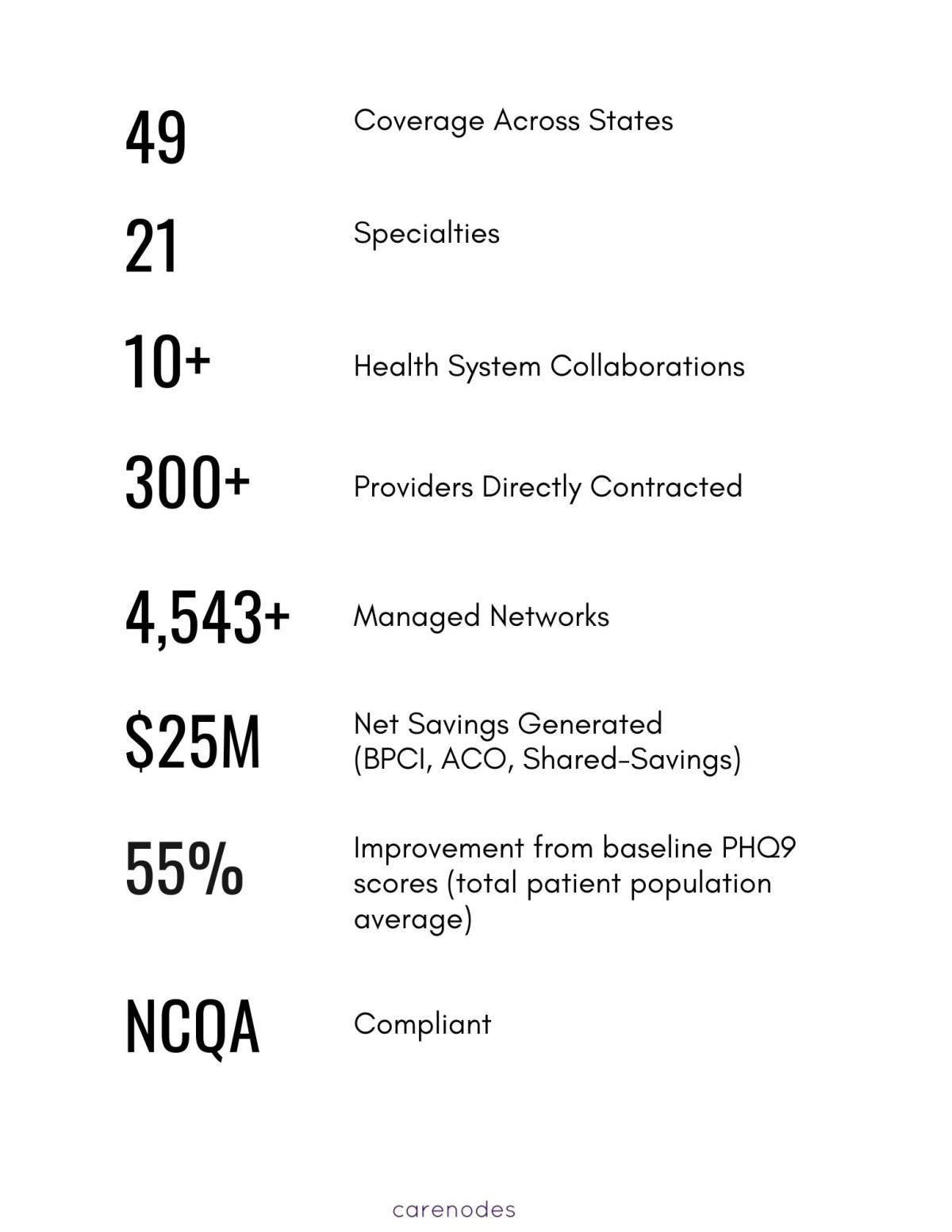

Thoughts from Alex Yarijanian and Carenodes outcomes

Healthcare Startups take too long to go to market hence innovations do not get to the American people in a form and fashion conducive to the aims of healthcare quality and performance in population health management.
When I left my management role at Humana to enter into the startup world, I was shocked to find that a vast majority of Health Tech organizations are founded by innovators with non-healthcare backgrounds.

Healthcare Startups take too long to go to market hence innovations do not get to the American people in a form and fashion conducive to the aims of healthcare quality and performance in population health management.

When I left my management role at Humana to enter into the startup world, I was shocked to find that a vast majority of Health Tech organizations are founded by innovators with non-healthcare backgrounds.

I found that, in my conversations with startup leaders, they were overconfident and naive about the industry; about the many roadblocks and nuances of running a successful healthcare operation (ie. ‘Regulation Nation’, business complexity, and long ‘sales’ cycles become blockers to market entry).

Sadly and ultimately, this dynamic ‘kills’ otherwise life-changing innovations. We find this to be unfair. Not only to the startup but to the People. To you, Don. To me and my loved ones. These incredible inventions and ‘innovations’: dead on arrival; attributable to the founders’ lack of healthcare business navigational competency and expertise.

Educating the leaders was my first instinct (see me in action: Managed Care 101: Boot-camp for Healthcare Entrepreneurs).

Then, Carenodes Accelerator was born: a program along with outcomes not seen in the country. Programmatically, we provide an integrated suite of advisory, technological, data, clinical, and operational capabilities to ‘jumpstart’, or power, the startup on day 1.

We signed our first health technology startup in August 2020. Today, Carenodes has grown to 7 portfolio digital health startups. We are 100% fiscally self-sustained, fully bootstrapped, and led by a majority ‘minority’ team. Our leadership and downstream team composition is what the ‘equity and diversity’ movements of modern-day fantasize about.

As of the time of this correspondence, our startup medical groups have raised an aggregate of $210M in funding.

We have, in aggregate, provided 96,637 appointments to 36,718 patients (2019 – 2022) in 50 states + DC. We have accelerated Digital healthcare innovations to a scale now reaching 48 million Americans.

Net result on the US Healthcare System is: Access. Access for Payer, Provider & Patient. Not just one of these ‘nodes’ — but all.

By becoming ‘in-network’, the out-of-pocket burden for offerings based on ‘cash only’ direct-to-consumer strategies is reduced tremendously making it affordable for the consumer. At the same time, our digital health organizations generate (much) greater revenue by billing insurance and coordinating care in a way that is not incentivized in a cash-only model. Our medical group startups generate revenues in 6 months via health insurance network participation.

We provide a robust operation with clinical oversight beyond just ‘being an app’ on a cash model. Payers feel more comfortable with that type of organization. Hospitals and health systems trust the expertise and buy-in. Especially since insurance will be paying for the services.

This has benefited the startup, the patient, the payer, and us — the regular folks who NEED access.

What is our impact? See the following outcomes and have these figures speak for themselves:

Carenodes real-world implications and outcomes (from Oct 1, 2019 – Jan 1, 2022):

  • Using patented IoT-connected socks, we avoid 91% of all diabetic foot ulcer amputations.
  • Using FDA-approved AI technology, we monitor the hearts of CHF/HF (heart failure) patients at home and at skilled nursing facilities in NY and CA. Diverting 75% of avoidable ER utilization.
  • Using our 24/7 access to care platform, we have provided 66,467 virtual opioid use disorder treatment appointments.
  • Using our Biopsychosocial Network, we extend a highly coordinated ‘plug & play’ provider network of 134 health providers (and growing) to help ease the major challenges of workforce supply, recruitment, and management.
  • In connection with UCI and other major health systems, we are one of the very few delivery organizations providing Hospital at Home.
  • We have, in aggregate, provided 96,637 appointments to 36,718 patients (2019 – 2022) in 50 states + DC. We have accelerated Digital healthcare innovations to a scale now reaching 48 million Americans.

Here is a one-minute video update of our organizational position opening in the year 2022 (this clip is not made searchable on YouTube, but you should have access with the link).

Healthcare Flow of Funds explained: Healthcare Entrepreneur Bootcamp

Agenda Managed Care 101 for healthcare entrepreneurs seeking to do business in the California market.

Healthcare flow of funds explained. Managed Care 101 for healthcare entrepreneurs seeking to do business in the California market. Session led by Alex Yarijanian, CEO Carenodes. The aim: providing healthcare entrepreneurs with a framework within which they will find their place in the business value chain.

No business doing business in healthcare.

No business doing business in healthcare if you don’t know healthcare business. With that said, you shouldn’t limit yourself because you might have value to contribute. But it should worry you because you don’t have the time necessary to gain tribal, on-the-job, healthcare know-how and work experience.

This session challenges the idea that, just because you don’t have healthcare experience, you can’t learn if knowledge is transmitted in uniquely effective styles and methods.

Providing healthcare entrepreneurs with a framework within which they will find their place in the healthcare business value-chain.

Crossing the Chasm of Healthcare Startups: Reduce go-to-market time by understanding your leverqage points vis a vie industry meta-dynamics and insider insight. Bend the learning curve that surprises, paralyzes, and discourages many health technology startups.

Session Notes

A PILOT

Crossing the Chasm of Healthcare Startups: Reduce go-to-market time by understanding your leverage points vis a vie industry meta-dynamics and insider insight. Bend the learning curve that surprises, paralyzes, and discourages many health technology startups.

Managed Care Boot-camp for Healthcare Entrepreneurs, was a ‘pilot’ session designed to impart otherwise difficult to synthesize knowledge. Given its ‘pilot’ nature, please excuse instances where your experience might be interrupted by factors such as difficulty in whiteboard visibility, etc.

BOOTCAMP SESSION EXPERIENCE & OUTCOMES

Everyone should be able to walk out of this session feeling empowered by having learned the basic flow of funds (starting at the payer) and reimbursement structures along the healthcare delivery value chain. 

Managed Care Boot-camp for Healthcare Entrepreneurs, a ‘pilot’ session designed to impart otherwise difficult to synthesize knowledge with the following objectives:

1. Bend the learning curve of entrepreneurs in healthcare
2. Provide a framework to contextualize health tech business models (aim: to help provide a framework within which you will find your place in the business value chain).

You should be able to better refine your understanding of what ‘buckets’, and mechanisms, of funding you should pursue and trigger so as to index your business accordingly. Trends, current industry practices, and changes set to be effective in the future will be weaved into the session so as to contextualize the material. 

For an outline of topics covered, Managed Care 101 for healthcare entrepreneurs seeking to do business in the California market, see below.

to help healthcare entrepreneurs by providing a framework within which they will find their place in the business value chain.

otherwise, how else would you know how to price your deals and products?

Topics covered in this session are as follows:

I. Essential concepts
  • Crash course on 6 functional areas in any healthcare organization
    1. Operations: anything that hits P&Ls
    2. Compliance
    3. Network/Contracting
    4. Health Services: clinical services, medical director’s wheelhouse
    5. Quality: outcomes, QA/QI
    6. Engagement: outreach, customer services, etc.
  • Understanding Volume-to-Value drivers in payment
    • Business models for health technology companies
II. Managed Care Mindset: How to think like your customer.
  • Managed care: ‘utilization management’
  • Payment: Volume shift to value
  • Quality (‘value’) measured
    • Patient experience
    • Clinical outcomes
III. Lines of Business aka ‘LOB’ (funding source)
  • Medicare (Traditional Medicare and Medicare Advantage, Parts ABCD)
    Medicaid (managed Medicaid, state / federal, Medi-Cal)
  • Duals (Medicare and Medicaid beneficiaries)
  • Commercial (on exchange, off exchange)
IV. Products (benefit designs)
  • The spectrum of products: HMO, PPO, POS, EPO, FFS
  • Business ramifications
V. Difference between ‘LOB’ vs ‘product’
  • Difference between ‘LOB‘ (Medicare, commercial, etc) vs ‘product‘ (HMO, PPO, etc.)
VI. Main Reimbursement structures (payer/provider agreements)
  • Fee for service (FFS)
  • Value-based payment: upside, upside/downside
  • Predominate California Market Structure, determine who is at risk
    • Capitation
    • Delegation
  • Risk-based deals
    • Capitations and delegation of functions by the health plan to a third party
    • Global-risk, shared risk, dual risk.

When you collapse an accordion item and save, it will automatically display collapsed in front end

When you collapse an accordion item and save, it will automatically display collapsed in front end

Mental Health Awareness: Men Don’t Cry

A livestream discussion to raise awareness of minority mental health. The conversation took a turn for the expected level of viewer engagement.

Mental Health is Health

Dr. Godwin Orkeh and Alex Yarijanian discuss Covid-19 and the discrepancies in access to mental health care among minority groups, including the disenfranchised, uninsured, and underinsured.

Dr. Orkeh also sheds light on the difference between equity vs. equality, the providers’ index of suspicion, health-seeking behavior among men, and the stigma associated with Covid-19.

View the full discussion here.

Dr. Godwin ORKEH JR
Physician, experienced Medical Director, Public Health Officer and Quality Improvement Officer, with interest in International Health and Development. A key interest of his is the interplay of culture, language and its effects (labels), and the political and socio-economic factors that influence health-seeking behavior in the population.

Alex Yarijanian
CEO and founder of Carenodes, Alex is a longtime healthcare administrator, who marked his career by managing 28 safety net clinics across CA and TX, to 14 hospitals, over 50 skilled nursing facilities, to a national health plan. He is presently engaged in an effort to expand access to healthcare services, based on equity, and true to Parity between medical and mental health services.

Orchestrated by Carenodes Networks