How Are Physicians Paid?

Payors use a variety of reimbursement methodologies and reimbursement structures. Several reimbursement methodologies might be combined in a single arrangement with a payor, often as a means of transitioning to “value-based” payment. Reimbursement methodologies may include the following:

How Are Physicians Paid?

Payors use a variety of reimbursement methodologies and reimbursement structures. Several reimbursement methodologies might be combined in a single arrangement with a payor, often as a means of transitioning to “value-based” payment. Reimbursement methodologies may include the following:


Fee-for-service reimbursement

fixed reimbursement amounts per item or service furnished, commonly negotiated in a physician participation agreement with the plan. At base, the “plan” pays the cost of medical care, while the “payor” is an entity responsible for the processing of patient eligibility, services, claims, enrollment, or payment.


Direct to Employer

direct and unique arrangements between physicians and ERISA self-funded plans for discrete categories of care.


Care coordination

payment for care coordination activities, often with a focus on population health management.


Quality incentives

payment is based in part on achieving pre-set quality of care metrics across an assigned population of members.


Bundled payments

fixed prospective or retrospective reimbursement for a defined bundle of services that can be furnished by different physicians (e.g., hip/knee replacement).


Shared savings

potential upside-only reimbursement, in addition to fee-for-service reimbursement, when aggregate population health care costs are less than a predefined baseline amount. The “savings” are shared between the payor and the physician.


Shared risk

potential upside or downside reimbursement, in addition to fee-for-service reimbursement, depending on whether aggregate population health care costs are more or less than a predefined baseline amount. The “savings” or “losses” are shared between the payor and the physician (or among physicians).


Full or partial capitated payments

A per-member, per-month reimbursement to provide all (or a defined subset of) covered services without reference to volume, utilization, or costs. There is typically no separate fee-for-service payment from the payor, except for specified carved-out services.

Who Qualifies for Chronic Care Management Services

Patients with multiple (two or more) chronic conditions expected to last at least 12 months or until the death of the patient, and that place the patient at significant risk of death, acute exacerbation/decompensation, or functional decline, are eligible for CCM services

Who Qualifies for Chronic Care Management Services

Per MLN Chronic Care Management Services, the following patients are eligible: “Patients with multiple (two or more) chronic conditions expected to last at least 12 months or until the death of the patient, and that place the patient at significant risk of death, acute exacerbation/decompensation, or functional decline, are eligible for CCM services.”

Examples of chronic conditions include, but are not limited to, the following:

     ● Alzheimer’s disease and related dementia
     ● Arthritis (osteoarthritis and rheumatoid)
     ● Asthma
     ● Atrial fibrillation
     ● Autism spectrum disorders
     ● Cancer
     ● Cardiovascular Disease
     ● Chronic Obstructive Pulmonary Disease
     ● Depression
     ● Diabetes
     ● Hypertension
     ● Infectious diseases such as HIV/AIDS

NOTE: Do not report a complex and non-complex session in the same calendar month. 

Medicare Advantage Is Close to Becoming the Predominant Way That Medicare Beneficiaries Get Their Health Coverage and Care

As Medicare Advantage continues to grow, a gradual but significant reshaping of the Medicare program is taking place.

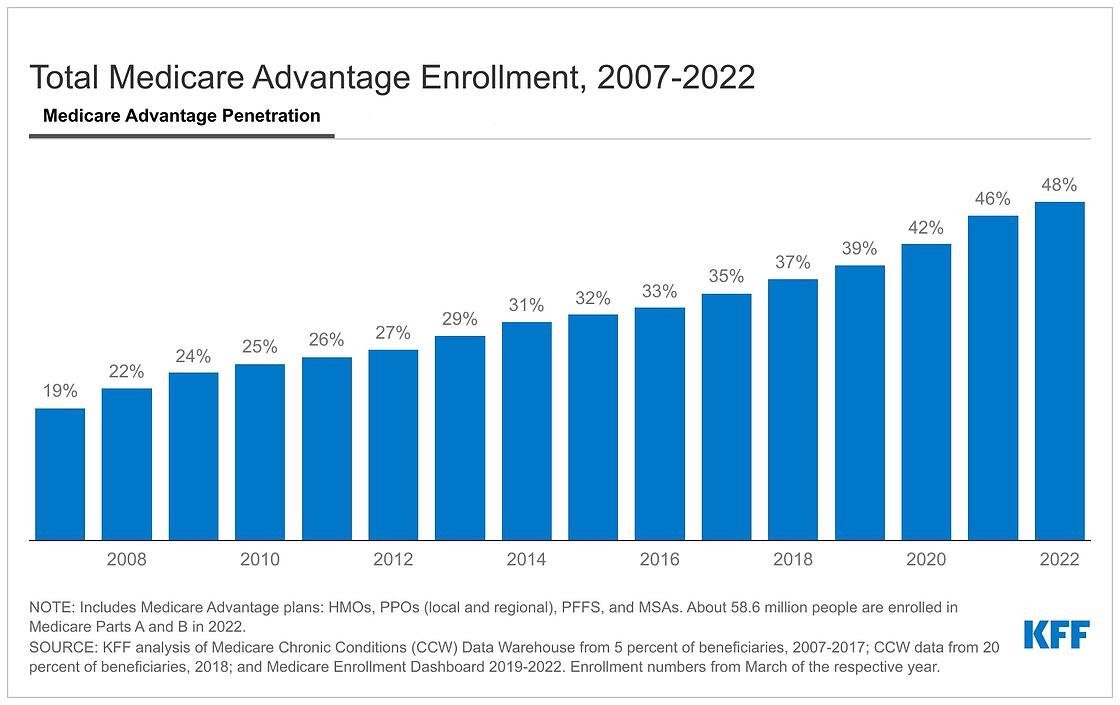
A new KFF analysis finds that nearly half of eligible Medicare beneficiaries – 28.4 million out of 58.6 million Medicare beneficiaries overall – are now enrolled in Medicare Advantage plans. That represents a more than doubling of the share of the eligible Medicare population enrolled in such plans from 2007 to 2022 (19% to 48%). Enrollment is projected to cross the 50 percent threshold as soon as next year, making Medicare Advantage the predominant way that Medicare beneficiaries with Parts A and B get their coverage and care.

Thoughts from Alex Yarijanian and Carenodes outcomes

Healthcare Startups take too long to go to market hence innovations do not get to the American people in a form and fashion conducive to the aims of healthcare quality and performance in population health management.
When I left my management role at Humana to enter into the startup world, I was shocked to find that a vast majority of Health Tech organizations are founded by innovators with non-healthcare backgrounds.

Healthcare Startups take too long to go to market hence innovations do not get to the American people in a form and fashion conducive to the aims of healthcare quality and performance in population health management.

When I left my management role at Humana to enter into the startup world, I was shocked to find that a vast majority of Health Tech organizations are founded by innovators with non-healthcare backgrounds.

I found that, in my conversations with startup leaders, they were overconfident and naive about the industry; about the many roadblocks and nuances of running a successful healthcare operation (ie. ‘Regulation Nation’, business complexity, and long ‘sales’ cycles become blockers to market entry).

Sadly and ultimately, this dynamic ‘kills’ otherwise life-changing innovations. We find this to be unfair. Not only to the startup but to the People. To you, Don. To me and my loved ones. These incredible inventions and ‘innovations’: dead on arrival; attributable to the founders’ lack of healthcare business navigational competency and expertise.

Educating the leaders was my first instinct (see me in action: Managed Care 101: Boot-camp for Healthcare Entrepreneurs).

Then, Carenodes Accelerator was born: a program along with outcomes not seen in the country. Programmatically, we provide an integrated suite of advisory, technological, data, clinical, and operational capabilities to ‘jumpstart’, or power, the startup on day 1.

We signed our first health technology startup in August 2020. Today, Carenodes has grown to 7 portfolio digital health startups. We are 100% fiscally self-sustained, fully bootstrapped, and led by a majority ‘minority’ team. Our leadership and downstream team composition is what the ‘equity and diversity’ movements of modern-day fantasize about.

As of the time of this correspondence, our startup medical groups have raised an aggregate of $210M in funding.

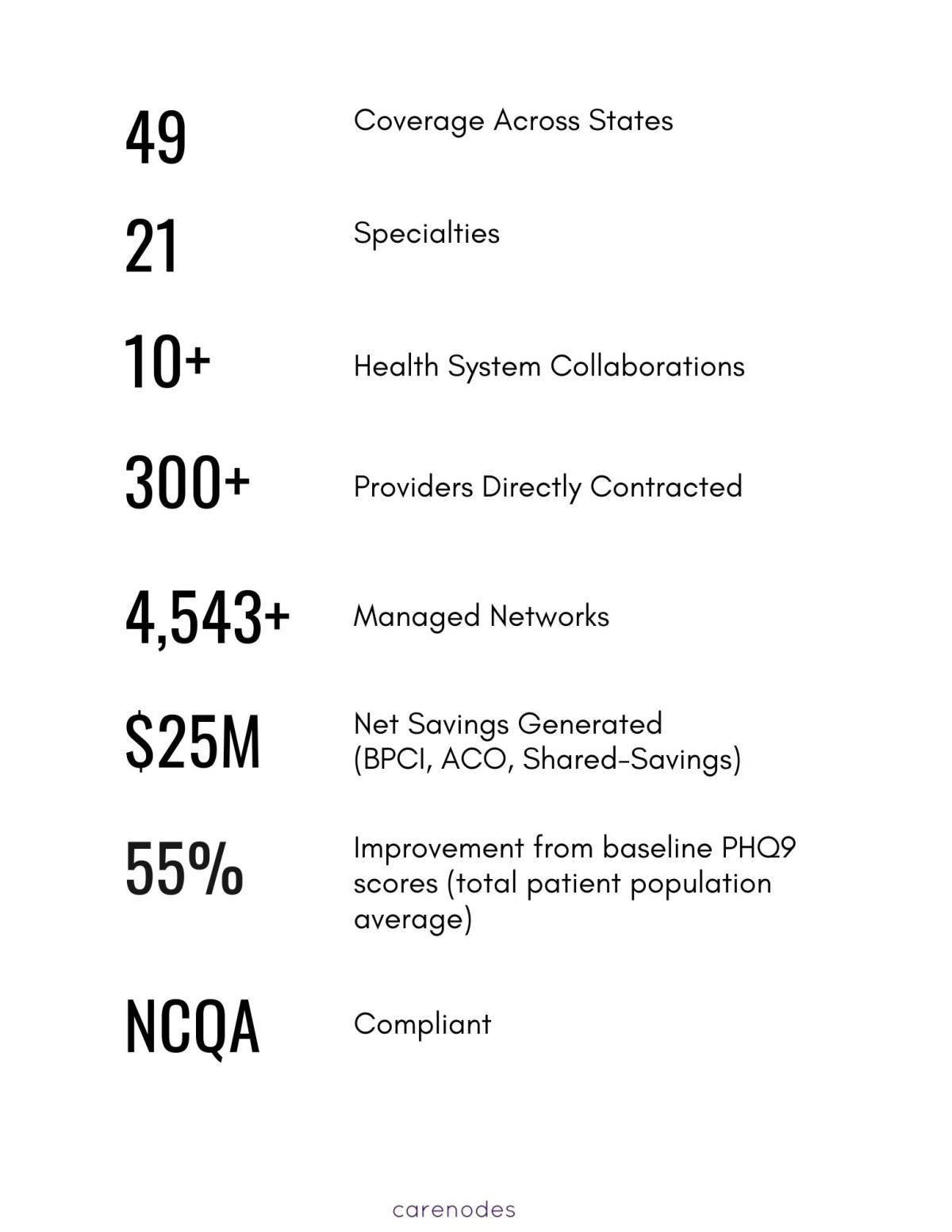
We have, in aggregate, provided 96,637 appointments to 36,718 patients (2019 – 2022) in 50 states + DC. We have accelerated Digital healthcare innovations to a scale now reaching 48 million Americans.

Net result on the US Healthcare System is: Access. Access for Payer, Provider & Patient. Not just one of these ‘nodes’ — but all.

By becoming ‘in-network’, the out-of-pocket burden for offerings based on ‘cash only’ direct-to-consumer strategies is reduced tremendously making it affordable for the consumer. At the same time, our digital health organizations generate (much) greater revenue by billing insurance and coordinating care in a way that is not incentivized in a cash-only model. Our medical group startups generate revenues in 6 months via health insurance network participation.

We provide a robust operation with clinical oversight beyond just ‘being an app’ on a cash model. Payers feel more comfortable with that type of organization. Hospitals and health systems trust the expertise and buy-in. Especially since insurance will be paying for the services.

This has benefited the startup, the patient, the payer, and us — the regular folks who NEED access.

What is our impact? See the following outcomes and have these figures speak for themselves:

Carenodes real-world implications and outcomes (from Oct 1, 2019 – Jan 1, 2022):

  • Using patented IoT-connected socks, we avoid 91% of all diabetic foot ulcer amputations.
  • Using FDA-approved AI technology, we monitor the hearts of CHF/HF (heart failure) patients at home and at skilled nursing facilities in NY and CA. Diverting 75% of avoidable ER utilization.
  • Using our 24/7 access to care platform, we have provided 66,467 virtual opioid use disorder treatment appointments.
  • Using our Biopsychosocial Network, we extend a highly coordinated ‘plug & play’ provider network of 134 health providers (and growing) to help ease the major challenges of workforce supply, recruitment, and management.
  • In connection with UCI and other major health systems, we are one of the very few delivery organizations providing Hospital at Home.
  • We have, in aggregate, provided 96,637 appointments to 36,718 patients (2019 – 2022) in 50 states + DC. We have accelerated Digital healthcare innovations to a scale now reaching 48 million Americans.

Here is a one-minute video update of our organizational position opening in the year 2022 (this clip is not made searchable on YouTube, but you should have access with the link).

Changing Demographics & Value Based Care

The United States is going through a fundamental shift in its demographics. By 2035, there will be more seniors than children under the age of 18.

The United States is going through a fundamental shift in its demographics. By 2035, there will be more seniors than children under the age of 18. This comes as the number of clinicians and caregivers for those seniors is decreasing rapidly, putting pressure on healthcare and social service systems to improve the efficiency of how they care for our nation’s seniors.

Telehealth and connected care have the potential to increase the reach of the healthcare system where seniors want to receive care. Regardless of reimbursement and incentives, connected care and telehealth are essential for any healthcare system to adapt to our nation’s changing demographics and provide care that helps seniors age-in-place.

The U.S. is stuck in a system of volume-based (fee-for-service) care that continues to drive up costs without providing better outcomes for patients.

The U.S. is stuck in a system of volume-based (fee-for-service) care that continues to drive up costs without providing better outcomes for patients. At a time when so many Americans and employers are looking for new solutions to high prices and poor health outcomes, value-based care can slow the trajectory of costs. Instead of clinicians charging patients and insurers for every appointment, test, or service, value-based payment approaches provide clinicians with more flexibility and accountability to focus on meaningful, cost-effective services to improve their patients’ overall health. Opportunities for success include fewer visits to the doctors’ office, fewer trips to the emergency room, and ultimately the elimination of avoidable hospitalizations.

The United States is going through a fundamental shift in its demographics. By 2035, there will be more seniors than children under the age of 18.

This comes as the number of clinicians and caregivers for those seniors is decreasing rapidly, putting pressure on healthcare and social service systems to improve the efficiency of how they care for our nation’s seniors.

Telehealth and connected care have the potential to increase the reach of the healthcare system where seniors want to receive care.

Regardless of reimbursement and incentives, connected care and telehealth are essential for any healthcare system to adapt to our nation’s changing demographics and provide care that helps seniors age-in-place.

CARES Act Telehealth Expansion: Trends in Post-Discharge Follow-Up and Association with 30-Day Readmissions for Hospital Readmissions Reduction Program Health Conditions

CARES Act Telehealth Expansion: Trends in Post-Discharge Follow-Up and Association with 30-Day Readmissions for Hospital Readmissions Reduction Program Health Conditions

 CARES Act Telehealth Expansion: Trends in Post-Discharge Follow-Up and Association with 30-Day Readmissions for Hospital Readmissions Reduction Program Health Conditions

As policymakers consider permanent telehealth policy changes, tracking the latest data has become increasingly important, in addition to breaking down data highlights and differences. Two new Centers for Medicare & Medicaid Services (CMS) Data Highlight reports were recently released that look at telehealth trends amongst Medicare patients during the pandemic. In addition, a Government Accountability Office (GAO)report submitted to Congress in early February assessed telehealth expansion impacts related to mental healthcare access for military service members. Key findings from the CMS data include that telehealth may reduce hospital readmission rates and disparities and improve opioid use disorder (OUD) treatment access. Meanwhile the GAO report showcased the importance of telehealth education to both providers and patients in ensuring access to care via telehealth.

CMS Data – Telehealth Impacts & Disparities on Follow-Up Care and OUD Treatment Access

The first CMS Data Highlight report, CARES Act Telehealth Expansion: Trends in Post-Discharge Follow-Up and Association with 30-Day Readmissions for Hospital Readmissions Reduction Program Health Conditions, looked at hospital readmission rates, which are typically viewed as key indicators in determining quality of care and potentially poor post-discharge follow-up care. CMS has sought to reduce excess readmissions over the years through its Hospital Readmissions Reduction Program, which assesses certain health conditions including heart failure, pneumonia and chronic obstructive pulmonary disease (COPD), as well as specific surgical procedures – coronary artery bypass and elective hip and/or knee replacements. As the brief notes, only with recent pandemic policy changes, has the ability to utilize and study telehealth as a modality for post-discharge follow-up care become possible.

The report used Medicare beneficiary sociodemographic data as well as Medicare claims data from April 1, 2019 – September 30, 2020 to look at hospitalizations and determine any notable telehealth impacts on post-discharge follow-up care and readmission rates within 30 days of discharge date. The study also assessed differences by modality, finding that synchronous audio/visual telehealth accounted for the majority of follow-up visits, with use increasing from 61%-69% while audio-only use decreased from 39%-31% during the same timeframe. Notably, the brief ultimately found no exacerbation of pre-COVID disparities in use of post-discharge follow-up, rather the findings suggest that continued telehealth policy expansions may help increase follow-up and reduce readmissions among underserved populations. However, given disparities in broadband access combined with finding potentially greater willingness and/or capacity of minority beneficiaries to adopt telehealth, the report cautions that if telephone visits are not maintained in permanent policies, some of the initial adoption could be at risk.

The second CMS Data Highlight report, Changes in Access to Medication Treatment during COVID-19 Telehealth Expansion and Disparities in Telehealth Use for Medicare Beneficiaries with Opioid Use Disorder, looked at access to medications for treating opioid use disorder (OUD). The data also pointed toward telehealth expansions improving access and found that beneficiaries accessing OUD care had lower use of inpatient and/or emergency department visits indicating that better access may reduce more costly care. Among OUD beneficiaries, few disparities in telehealth use were found based on race, ethnicity, or social deprivation levels, but there were disparities discovered based on Medicare eligibility, dual eligibility status, and rurality. Generally, Medicare beneficiaries over 65, beneficiaries not dually-eligible for Medicare and Medicaid, and those in rural areas were found to utilize telehealth less. Beneficiaries with the highest rates of utilization were those with OUD in addition to other more complex health needs.

GAO Study – DOD Audit Shows increase in Telehealth Utilization and Education

In early February, the GAO provided a report to Congress, Defense Health Care: DOD Expanded Telehealth for Mental Health Care during the COVID-19 Pandemic, that examined multiple sources, including relevant Department of Defense (DOD) policies and mental health reports from March 2020 to November 2021, as well as Defense Health Agency (DHA) utilization data from January 2019 to April 2021. Interviews across agencies and each branch of the military were also conducted for purposes of the study.

Focusing its findings on active duty servicemembers, pre-pandemic telehealth visits were found to make up 15% of mental health care visits, with that number increasing by 275% over the first few months of 2020 as the DOD shifted its care delivery in response to the pandemic. The utilization rates began decreasing by April of 2020 and in April 2021 were 33% of all mental health care visits. Some of the main policies found to accommodate the greater use of telehealth included disseminating information to mental health providers to assist them in delivering care via telehealth, amongst other provider resources. Online training was also provided and helpful information on mental health was provided to servicemembers as well. DOD officials stated the value of telehealth and its ability to improve access and continuity of care. In addition, officials suggested that telehealth may reduce the stigma of seeking mental health treatment by allowing servicemembers to receive care more privately without the risk of being seen in military treatment facilities.

Looking Ahead – Data Download

Access, disparities, and utilization continue to be issues of great interest in the latest studies and policymaker discussions around post-pandemic telehealth policy. While data may help inform necessary policy steps, findings continue to vary and much of the information available is largely limited to certain populations, modalities, services, and time periods. Therefore, it remains important that policymakers also keep data disparities in mind as to not inappropriately generalize specific findings while also allowing ample time for gathering more information before making any drastic conclusions or changes.

For more information on CMS Data Highlights and the two studies mentioned you can review the CMS website. Please access the GAO report in its entirety for its additional findings.

Healt Plan Leaders’ Statements About VBC

“The patient-centered medical home has served as a catalyst and organizing philosophy to refine our state care delivery system. It has brought stakeholders from both the public and private sector together to organize around a philosophy of care delivery that brings value to our citizens. This model serves to create value in our health care system through improving the quality of care delivered to patients and maximizing the value of each health care dollar spent.”

Health Plans

“The patient-centered medical home has served as a catalyst and organizing philosophy to refine our state care delivery system. It has brought stakeholders from both the public and private sector together to organize around a philosophy of care delivery that brings value to our citizens. This model serves to create value in our health care system through improving the quality of care delivered to patients and maximizing the value of each health care dollar spent.”

–Julie Schilz, R.N., B.S.N., IPIP, Director, Patient Centered Care, Wellpoint

“The patient-centered medical home encourages strong, meaningful relationships among families, their physicians and care teams, and their health plans. The result is care that is accessible, continuous, and compassionate with care deliverers and patients working together. In this model, patients are better empowered and ultimately can make more informed health care decisions for themselves and their families. The patient-centered medical home is a core tenet in ‘The Pathway to Covering America,’ the Blue Cross and Blue Shield recommendations to Congress and the American people for a better health care system for the future.”

–Scott P. Serota, President and CEO, Blue Cross and Blue Shield Association

“The patient-centered medical home represents a pro-active approach to guiding patients as they take a more active role in managing their own health and medical conditions. Creating a health care team with the patient at the center involves many challenges ranging from enhanced information support at the time of service to improving communication and educational skills.”

 –Thomas Simmer, M.D., Senior Vice President and Chief Medical Officer, Blue Cross Blue Shield of Michigan

“We believe the patient-centered medical home model is a promising approach that facilitates moving from a fragmented health care system to a more coordinated system, improving satisfaction for our customers and their primary care providers.”

–Jeff Kang, MD, MPH, Senior Vice President & Wellness Services, Walgreens

NEW RULES:Bans on balance billing and out-of-network cost-sharing

Effective Jan. 1, 2022, Health Plan commercial members will be protected from balance billing after receiving emergency care and nonemergency care from certain out-of-network providers at in-network facilities. The No Surprises Act, which is included within the Consolidated Appropriations Act of 2021 (the CAA), provides the following:

Effective Jan. 1, 2022, Health Plan commercial members will be protected from balance billing after receiving emergency care and nonemergency care from certain out-of-network providers at in-network facilities. The No Surprises Act, which is included within the Consolidated Appropriations Act of 2021 (the CAA), provides the following:

Bans surprise billing for emergency services

If a member receives emergency services, they will be covered at the in-network rate, and the services do not require prior authorization from Health Plan. This is true even if the services are received at a facility or from a provider that does not participate in their network. Additionally, members will be protected from balance billing when receiving post-stabilization services at a nonparticipating facility.

Bans balance billing and out-of-network cost-sharing for emergency services as well as certain nonemergency services performed by a nonparticipating provider (or facility on behalf of the provider) at participating health care facilities including out-of-network ancillary providers such as pathologists, anesthesiologists, and radiologists at in-network facilities: 

In these situations, the member’s cost share cannot be higher than the cost share would have been if the services were provided by an in-network provider or an in-network facility. The member’s cost share must be based on the in-network rates.

Bans balance billing for out-of-network air ambulance service

Changing Demographics & Value-Based Care


Changing Demographics & Value Based Care

The U.S. is stuck in a system of volume-based (fee-for-service) care that continues to drive up costs without providing better outcomes for patients. At a time when so many Americans and employers are looking for new solutions to high prices and poor health outcomes, value-based care can slow the trajectory of costs. Instead of clinicians charging patients and insurers for every appointment, test, or service, value-based payment approaches provide clinicians with more flexibility and accountability to focus on meaningful, cost-effective services to improve their patients’ overall health. Opportunities for success include fewer visits to the doctors’ office, fewer trips to the emergency room, and ultimately the elimination of avoidable hospitalizations.

The United States is going through a fundamental shift in its demographics. By 2035, there will be more seniors than children under the age of 18. This comes as the number of clinicians and caregivers for those seniors is decreasing rapidly, putting pressure on healthcare and social service systems to improve the efficiency of how they care for our nation’s seniors.

Telehealth and connected care have the potential to increase the reach of the healthcare system where seniors want to receive care. Regardless of reimbursement and incentives, connected care and telehealth are essential for any healthcare system to adapt to our nation’s changing demographics and provide care that helps seniors age-in-place.

The United States is going through a fundamental shift in its demographics. By 2035, there will be more seniors than children under the age of 18. This comes as the number of clinicians and caregivers for those seniors is decreasing rapidly, putting pressure on healthcare and social service systems to improve the efficiency of how they care for our nation’s seniors.

Telehealth and connected care have the potential to increase the reach of the healthcare system where seniors want to receive care. Regardless of reimbursement and incentives, connected care and telehealth are essential for any healthcare system to adapt to our nation’s changing demographics and provide care that helps seniors age-in-place.

Improving Payment Accuracy In Health Insurance Marketplaces

In all three countries studied, risk adjustment leaves some enrollees highly underpaid and others highly overpaid. In the U.S. exchanges, for example, one in a thousand enrollees were underpaid by more than $190,000, and one in a thousand were overpaid by at least $95,000 in 2017.

Why This Study Is Important

Health insurance marketplaces that enable consumers to choose between competing health plans – such as the ACA insurance exchanges in the United States and similar national systems in The Netherlands and Germany – rely on risk adjustment to improve the accuracy of the premiums plans receive for individual enrollees. If risk adjustment is inadequate, premiums for some enrollees may fall well short of the spending plans incur for them, leaving insurers with high losses and incentives to avoid these enrollees; conversely, other enrollees may be overcompensated, with opposite effects. This study focuses on the “residual” spending differences between actual spending and risk-adjusted premiums, examines the subsets of enrollees for whom insurers are either very dramatically under-or overpaid, and demonstrates how an innovative reinsurance program could significantly improve payment accuracy.

What This Study Found

  • In all three countries studied, risk adjustment leaves some enrollees highly underpaid and others highly overpaid. In the U.S. exchanges, for example, one in a thousand enrollees were underpaid by more than $190,000, and one in a thousand were overpaid by at least $95,000 in 2017.
  • In all three countries, there is high year-to-year persistence in the individual enrollees who are either highly under- or overpaid. Such predictability can contribute to selection problems that inhibit market efficiency.
  • In all three countries, a large portion of the variance in spending that is unexplained after risk adjustment is due to the most dramatically underpaid enrollees, pointing to the chance to improve payment accuracy by focusing on this group.
  • Reinsurance that limits insurers’ current-year losses for the 1 percent of enrollees who were most underpaid in the prior year substantially improves overall risk-adjusted payment accuracy by redistributing payments from the most overpaid to the most underpaid enrollees.
  • Because these reinsurance payments affect only a very small portion of total spending and enrollees, this improvement in payment accuracy is achieved without weakening insurers’ incentives to control health care costs for their enrollees.

What These Findings Mean

Despite real differences in how the three study countries administer risk adjustments, study findings are strikingly similar across the countries. In all cases, even the sophisticated risk adjustment methods they currently use fail to accurately compensate health plans for the risks represented by specific enrollees. Large losses and large profits on certain enrollees, combined with persistence over time in which individuals are highly under- and overpaid, create incentives that work against an efficient insurance market that has robust participation by insurers and neither favors nor disadvantages individual enrollees. This study demonstrated the important payment improvements that can be achieved across the board by reinsuring against losses for the small portion of enrollees whose care is grossly undercompensated and suggests this reinsurance will not weaken plan incentives to effectively manage care for these very high cost patients.

More About This Study

This study used extensive national claims data from the three study countries to replicate the relevant risk adjustment methodology and compute residual spending amounts for individual enrollees. Health care spending and presence of diseases were examined for enrollees in the top and bottom 0.1 and 1.0 percent segments of the residual spending distribution. Year-to-year persistence of residual spending was tracked by examining the probability of remaining in the same high/low tranche from year to year and the correlation of residual spending across years. Enrollees with high residual spending in the previous year were placed in a high-risk pool that was eligible for reinsurance based on current year residual spending. The impact of such reinsurance was evaluated by considering the improvement in individual-level payment fit, the funds required for reinsurance and the share of enrollees affected.

Full Citation

McGuire TG, Schillo S, and van Kleef RC. “Very High and Low Residual Spenders in Private Health Insurance Markets: Germany, The Netherlands and the U.S. Marketplaces.” The European Journal of Health Economics, (2020). https://doi.org/10.1007/s10198…