Addressing Critical Health Needs: Partnership HealthPlan of California Strategic Response to the 2024 Population Needs Assessment

Business Brief: Addressing Critical Needs in Population Health

Partnership’s membership remained relatively stable in 2023. The member redetermination process, resulting from the winding down of the COVID-19 Public Health emergency, caused some small fluctuations. At the close of 2023, Partnership served approximately 660,800 members throughout 14 counties.

In 2024, Partnership will no longer contract with Kaiser Permanente, will fully operationalize its 10-county expansion, and the Medi-Cal redetermination process will continue.

Partnership’s membership is expected to continue to fluctuate as a result. The 2024 Population Needs Assessment draws from a broad range of data sources to identify member needs along with the overall community conditions where members live.

Executive Summary

The 2024 Population Needs Assessment (PNA) conducted by the Partnership HealthPlan of California highlights significant gaps in healthcare access, economic stability, neighborhood conditions, and social support across its 14-county service area. This brief outlines the critical needs identified and the strategic responses planned to address these issues, ensuring improved health outcomes and equity for all members.

Identified Needs and Strategic Responses

1. Healthcare Access and Quality

Identified Needs:

  • Provider Shortages: Insufficient access to primary care, dental, specialty care, mental/behavioral health, and substance use care providers.
  • Transportation Challenges: Particularly in rural areas, long distances and lack of transportation options hinder access to care.

Strategic Responses:

  • Provider Recruitment and Retention Initiatives:
    • Launching a Provider Recruitment Program to attract healthcare professionals to underserved areas with new incentives, including sign-on bonuses.
    • Implementing a Provider Retention Initiative (PRI) Pilot to incentivize primary care clinicians for long-term service, preserving institutional knowledge and clinical leadership.
    • Telehealth Expansion: Increasing the use of telemedicine to enhance access to behavioral health services, particularly in remote regions.
2. Economic Stability

Identified Needs:

  • High Poverty and Unemployment Rates: Prevalent in rural and frontier regions.
  • Severe Housing Problems: Overcrowding, high housing costs, and inadequate facilities affect many households.

Strategic Responses:

  • Leveraging State Funds:
    • Utilizing initiatives like CalAIM, Community Supports, and the Homeless and Housing Incentive Program (HHIP) to address housing instability.
    • Offering scholarships to local Community Health Worker (CHW) programs to create employment opportunities and enhance the healthcare workforce.
3. Neighborhood and Built Environment

Identified Needs:

  • Limited Access to Healthy Foods: Particularly in rural areas, contributing to poor nutrition and related health issues.
  • High Rates of Physical Inactivity: Linked to chronic health conditions in several counties.

Strategic Responses:

  • Food and Nutrition Programs:
    • Partnering with local agencies to improve access to healthy foods and provide nutrition education.
    • Conducting outreach to promote healthy eating habits and reduce food insecurity.
  • Physical Activity Promotion: Implementing community-based programs to encourage physical activity and healthy lifestyles.
4. Social and Community Support

Identified Needs:

  • High Rates of Adverse Childhood Experiences (ACEs): Leading to long-term negative health outcomes.
  • Substance Use and Smoking: High prevalence of tobacco use and substance abuse, including among adolescents.

Strategic Responses:

  • ACE Prevention and Support Programs: Developing initiatives in collaboration with schools and community organizations to address ACEs and provide support.
  • Substance Use Prevention Campaigns:
    • Conducting educational interventions to reduce tobacco use and prevent substance abuse among adolescents and adults.
    • Promoting smoke-free environments through community outreach and education.

Conclusion

The Partnership HealthPlan of California is committed to addressing the critical needs identified in the 2024 PNA through comprehensive and targeted initiatives. By enhancing healthcare access, addressing social determinants of health, improving neighborhood conditions, and strengthening community support, the organization aims to foster equitable health outcomes and ensure a higher quality of life for all its members.

Population Needs Assessment

Partnership conducts an annual Population Needs Assessment (PNA), which reviews and analyzes the overall environment, specific community needs, and factors influencing the health and well-being of Partnership’s member population.

To read the 2024 report, click on the following: Population Needs Assessment

Population Needs Assessment

Partnership conducts an annual Population Needs Assessment (PNA), which reviews and analyzes the overall environment, specific community needs, and factors influencing the health and well-being of Partnership’s member population.

To read the 2024 report, click on the following: Population Needs Assessment

Archived Population Needs Assessments

​Community Health Assessments and Community Health Improvement Plan

Partnership participates in the Community Health Assessments (CHA) (sometimes called a CHNA) and Community Health Improvement Plan (CHIP) processes conducted by the local health jurisdiction in each of our 24 counties. This collaboration enhances Partnership’s ability to identify needs and assets within our members’ communities, and strengthens our relationships with community partners.

Below you will find CHAs and CHIPs for each Partnership county in addition to how Partnership participated with the county.

Butte County

Partnership staff participated in a review of the key findings and top 6 health needs identified in the CHA. Butte County released their CHA in December 2023. Click here to view the report.

Modoc County

Partnership staff participated in a review of county concerns, and discussed a tentative goal with the county. Modoc County released their CHNA in January 2024. Click here to view the report.

Napa County

Partnership staff participated in a review of county concerns, and discussed a tentative goal with the county. Napa County released their CHA in December 2023. Click here to view the report.

Shasta County

Partnership staff participated in a review of the key findings and priority areas identified in the CHIP process. Partnership and Shasta County co-developed a SMART goal focusing on increasing child well visits, aligned with DCHS’s Bold Goals 50×2025 initiative. Shasta County released their CHIP in June 2024. Click here to view the report.

Sonoma County

Partnership staff participated in a review of the county’s approach to their assessment and improvement plan, discussed the county’s 4 priority areas, and gathered ideas for a tentative shared goal with the county. Sonoma County released their combined CHA/CHIP report in December 2023. Click here to view the report.

Yuba County

Partnership staff participated in a review of CHIP health priority areas, and a discussion around how Partnership can help the county going forward. Yuba County released their CHIP in December 2023. Click here to view the report.
Introducing the Care MAP Tool: A Comprehensive Guide

Introducing the Care MAP Tool, designed to support healthcare providers in managing complex care needs. This user-friendly, Excel-based tool offers a structured framework for effective care coordination, resource allocation, and patient management. With modules for an overview and practical scenarios, plus a comprehensive resource library and FAQ section, the Care MAP Tool enhances care strategies and improves patient outcomes. Download it today and elevate your care management practices.

Effective care management is crucial in today’s complex healthcare landscape. To support healthcare professionals and organizations, we are excited to introduce the Care MAP Tool, a valuable resource designed to aid in complex care management. This blog will provide an overview of the Care MAP Tool, walk you through an example scenario, and offer access to a resource library and frequently asked questions (FAQ) section.

Module 1: Care MAP Overview

The Care MAP (Management and Planning) Tool is designed to support healthcare providers in managing and planning care for patients with complex health needs. This tool provides a structured framework to help clinics navigate the intricacies of care coordination, resource allocation, and patient management. Here’s what you can expect from the Care MAP Tool:

  • Framework for Complex Care Management: The tool offers a comprehensive structure to address the multifaceted needs of patients requiring intensive care management.
  • User-Friendly Interface: The Excel-based tool is intuitive and easy to navigate, ensuring that healthcare providers can quickly integrate it into their workflows.
  • Scalable and Adaptable: Whether you’re a small clinic or a large healthcare organization, the Care MAP Tool can be scaled and adapted to fit your unique needs.

Module 2: Example Scenario

To illustrate the practical application of the Care MAP Tool, let’s walk through an example scenario:

Scenario: Managing a Patient with Multiple Chronic Conditions

  1. Patient Overview:
    • Name: Jane Doe
    • Age: 65
    • Conditions: Diabetes, Hypertension, Chronic Obstructive Pulmonary Disease (COPD)
  2. Initial Assessment:
    • Medical History Review: Gather comprehensive information about Jane’s medical history, including past treatments, hospitalizations, and medications.
    • Social Determinants of Health: Assess factors such as living conditions, access to transportation, and social support.
  3. Care Coordination:
    • Interdisciplinary Team: Form a care team that includes primary care physicians, specialists, nurses, social workers, and community health workers.
    • Care Plan Development: Create a personalized care plan that addresses Jane’s medical and social needs, with clear goals and timelines.
  4. Monitoring and Evaluation:
    • Regular Check-ins: Schedule regular appointments and follow-ups to monitor Jane’s progress.
    • Adjustments: Modify the care plan as needed based on Jane’s response to treatment and changes in her condition.

Resource Library

The Resource Library is a curated collection of materials to further support your use of the Care MAP Tool. Here, you’ll find:

  • Guides and Manuals: Detailed instructions on how to use the Care MAP Tool effectively.
  • Case Studies: Real-world examples of the tool in action, showcasing its impact on patient outcomes.
  • Training Videos: Step-by-step video tutorials to help you and your team get up to speed quickly.

FAQ

To ensure you have all the information you need, we’ve compiled a list of frequently asked questions:

Q1: Who can use the Care MAP Tool?
A1: The tool is designed for healthcare providers, including clinicians, care coordinators, and administrative staff.

Q2: Is there a cost associated with the Care MAP Tool?
A2: No, the Care MAP Tool is available for free download.

Q3: How do I get support if I encounter issues with the tool?
A3: Support is available through our online helpdesk. You can also refer to the Resource Library for troubleshooting guides.

Care MAP Tool Download

By using the Care MAP Tool, you acknowledge that you have read and agree to the disclaimer below. If you share the tool, ensure that all individuals given access to it have reviewed and agreed to the disclaimer language before using it for any purpose.

Disclaimer: The Care MAP Tool is intended as a general framework to support considerations around complex care management in a clinic setting. It is not meant for final staffing, clinical, administrative, operational, and/or financial decision-making. Information obtained from this tool is not and should not be taken as legal or financial advice and is not a substitute for consulting a qualified professional. Community Initiatives does not accept responsibility for any loss that may arise from reliance on this tool.

Source Link:

Download Materials:


Feel free to reach out with any questions or feedback about the Care MAP Tool. Happy planning!

ROI Calculator for Partnerships to Address Social Determinants of Health

The ROI Calculator for Partnerships to Address Social Determinants of Health is a tool designed to help CBOs and their health care partners explore, structure, and plan financial arrangements to fund social services for people with complex needs. The tool allows health systems, payers, medical providers, social service providers, and CBOs to determine the overall return on investment from integrating social services with medical care under different payment models.

Healthcare organizations are increasingly partnering with community-based organizations (CBOs) to address patients’ health-related social needs such as nutrition, housing, and transportation. These partnerships can help integrate services for people with complex needs, but health care and social service organizations often struggle to establish partnerships and contracts given their different structures and financial resources.

Access the ROI Calculator for Partnerships to Address Social Determinants of Health (ROI Calculator) — designed to assist CBOs and their health care partners to explore, structure, and plan financial arrangements to fund social services for people with complex needs.

The ROI Calculator for Partnerships to Address Social Determinants of Health is a tool designed to help CBOs and their health care partners explore, structure, and plan financial arrangements to fund social services for people with complex needs. The tool allows health systems, payers, medical providers, social service providers, and CBOs to determine the overall return on investment from integrating social services with medical care under different payment models.

This Better Care Playbook webinar describes the application of the ROI Calculator to health care organizations and CBOs. It features a case example of a Washington State CBO that used the tool to quantify the value of their services when developing a partnership with a Medicare Advantage plan.

Paying for Biopsychosocial Care

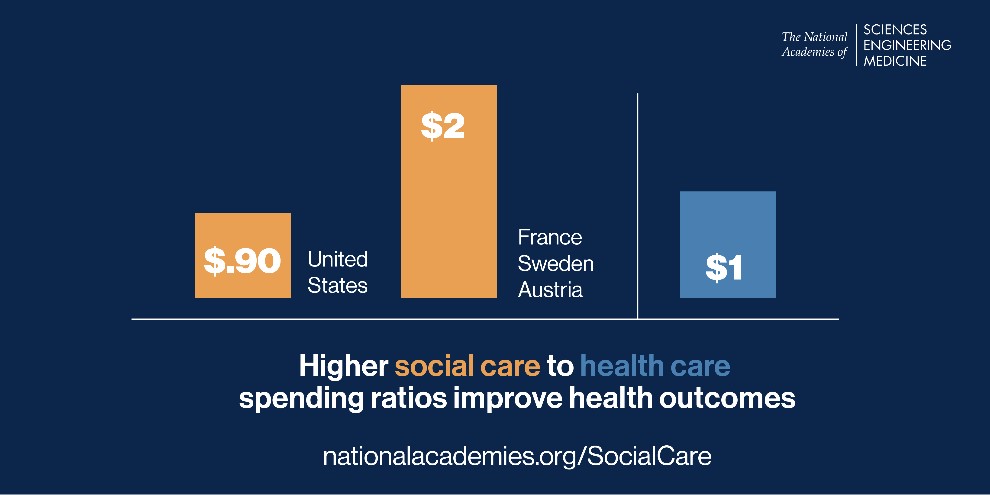
The system used to pay for health care today does not encourage the integration of health care and social care, nor can it adequately adapt to the trending shift toward value-based payments for care — paying for better quality and better health outcomes. New financing approaches are needed to enable the health care sector to engage in
activities that strengthen social care and community resources.

  • MCOs are obligated to provide care management, which includes the authority for MCOs to use their Medicaid funding to identify social care needs and link people to services.
  • MCOs can use their Medicaid funds to pay for social care as “in lieu of” services or as “value added services (for example, to provide medically tailored meals for a homebound individual or an air conditioner for a severely asthmatic child).
  • Some states require MCOs to contract with existing community-based organizations to provide services such as ombudsman (advocacy) services, nursing home eligibility assessments, and care management.
carenodes SDOH1
carenodes SDOH
carenodes SDOH